
Last updated September 20, 2026
Full 25-point door and opener safety check with every visit - springs, cables, rollers, tracks, and your LiftMaster or Chamberlain opener included
You get a price before we start. It does not change when the truck arrives.
 Before
 After
After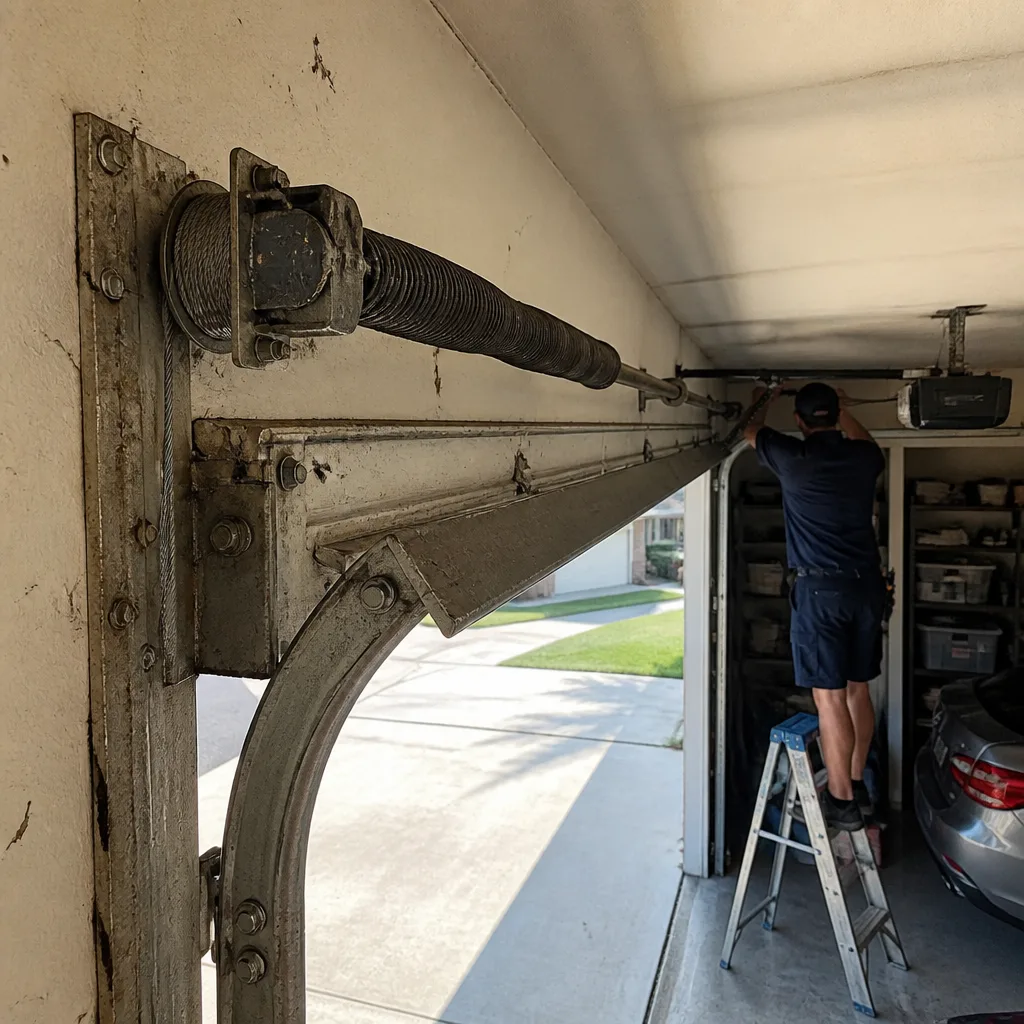 Before
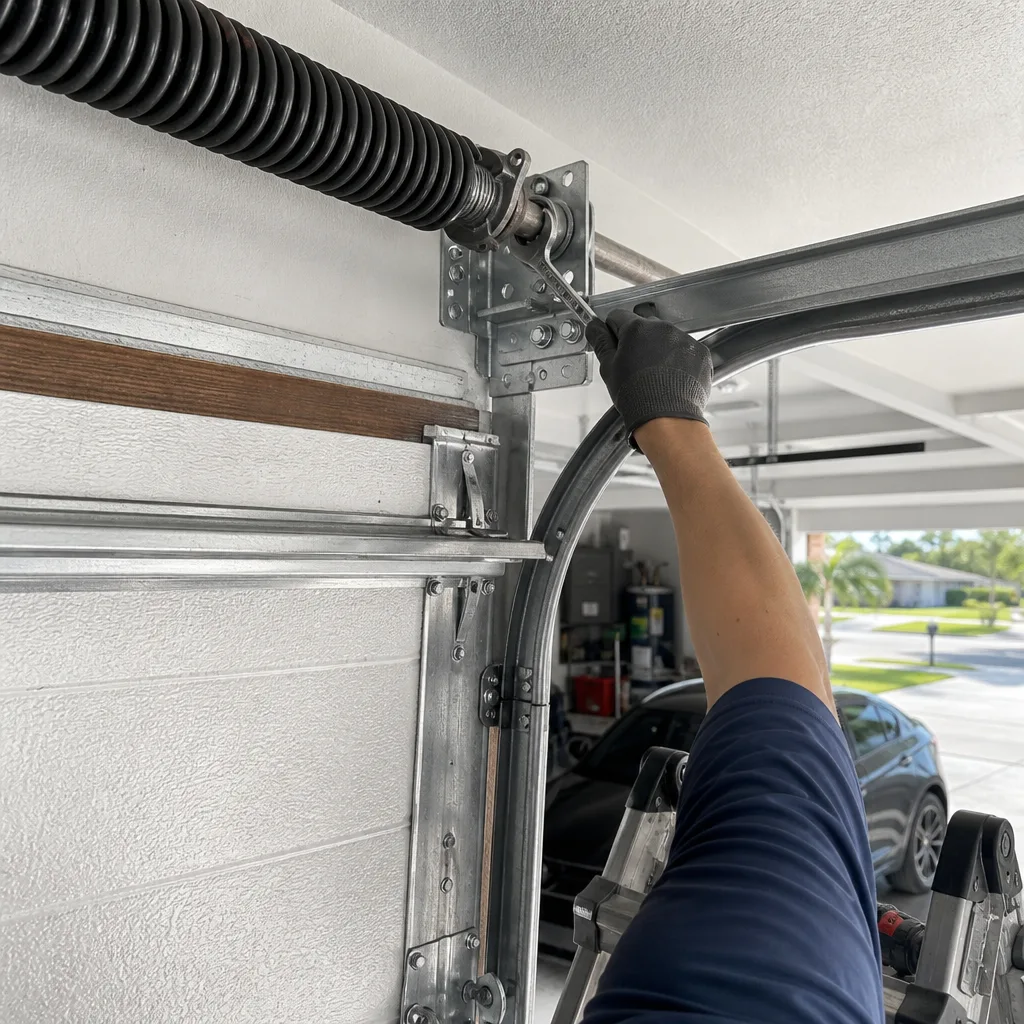 After
After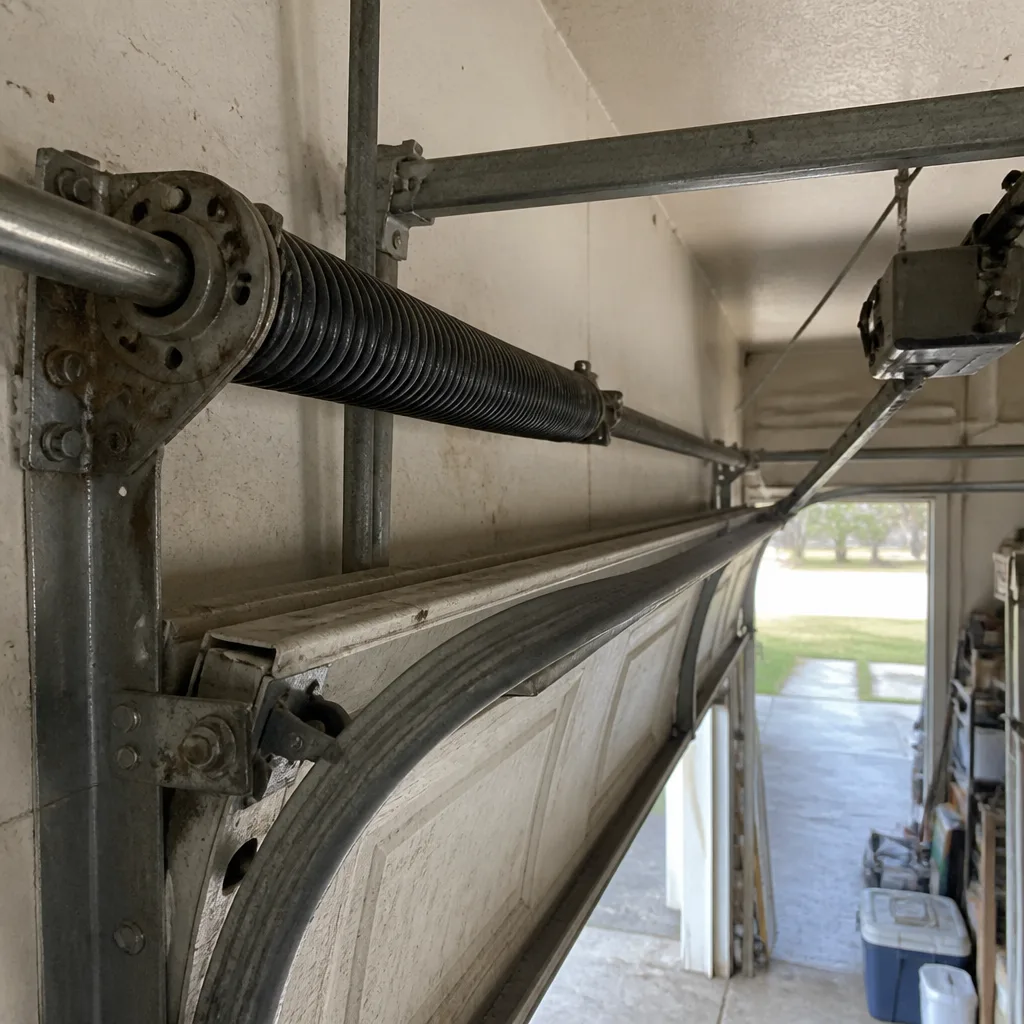 Before
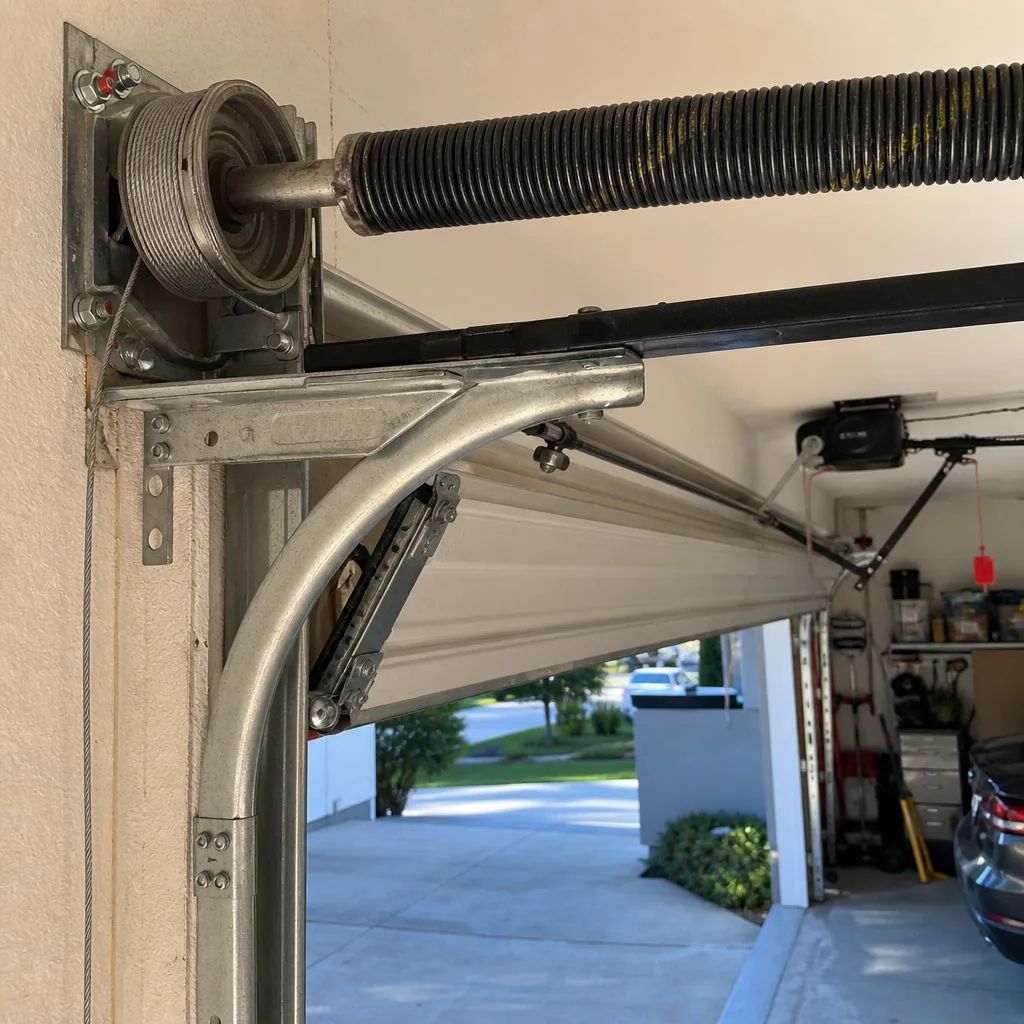 After
AfterSeasonal Garage Door Care for Bradenton: Year-Round Homeowner’s Guide
Most seasonal garage door advice is written for houses in Ohio or Minnesota, where “winterizing” means greasing rollers so they don’t freeze and checking that the bottom seal isn’t buried in snow. In Bradenton, following that calendar wastes a Saturday morning on tasks that don’t matter here while the actual seasonal threat goes unaddressed. The real enemy in Manatee County is the seven-month stretch from April through October, when salt-laden humidity from the Gulf pushes into your garage and settles onto every unpainted steel component. This guide maps garage door maintenance to the conditions we actually live with in Bradenton: storm-preparation windows, sustained heat and humidity, a mild dry season, and brief temperature swings that confuse opener logic boards. By the end, you’ll know what to check, when to check it, what it should cost if something fails, and how to document the work so you’re never guessing what was done and when.
Quick Answer
Seasonal garage door care in Bradenton means four distinct maintenance windows: a pre-storm hardware check in April and May focused on wind-load performance, a corrosion-prevention routine from June through September aimed at steel components, an opener force recalibration in November through February when cooler nights cause settings to drift, and a year-round weatherseal inspection schedule driven by UV exposure rather than temperature. Most of this work takes under 45 minutes per season and requires nothing more than a flashlight, a socket set, and a camera phone to document what you find. The tasks that actually protect a Bradenton garage door are checks, adjustments, and documentation, not lubrication marathons or cold-weather prep.
Table of Contents
- Pre-Storm Season (April-May): Wind-Load Hardware Checks
- Peak Humidity Stretch (June-September): Corrosion Control
- Dry Season (November-February): Opener Force Recalibration
- UV and Heat Effects on Weatherseal and Insulation
- The Bradenton Seasonal Maintenance Calendar
- Why Photo Documentation Changes Your Maintenance Game
- Common Mistakes to Avoid
- When to Call a Professional
- Frequently Asked Questions
- The Bottom Line
BeforeAfterPre-Storm Season (April-May): Wind-Load Hardware Checks
Garage doors are the largest opening in most Bradenton homes, and during a named storm, they’re the most likely point of structural failure. When wind pressure pushes against a 16-foot-wide door, the entire load transfers through four components: the cables, the brackets that anchor those cables, the fasteners holding the track to the wall, and the bottom seal that keeps wind-driven rain from becoming a water intrusion problem. Each one deserves a specific check before June 1.
Cable Tension and Condition
The lift cables on a torsion spring system run along both sides of the door and carry the spring’s tension. When a cable frays, it doesn’t fail quietly. You’ll see individual wire strands separating near the bottom bracket, or you’ll notice the cable starting to “birdcage” where it wraps around the drum. In Bradenton, cables corrode faster on west-facing garage doors because prevailing Gulf breezes deposit salt onto the hardware. A frayed cable under storm wind load is not a maintenance item; it’s a failure waiting for the worst possible moment.
Check each cable monthly from April through November. Run your finger along the cable with the door closed, feeling for broken strands, rust blooms, or flat spots. If you see any of these, stop using the door and get it serviced. Cables under torsion tension can cause serious injury if they snap while you’re working nearby.
Bracket Fastener Torque
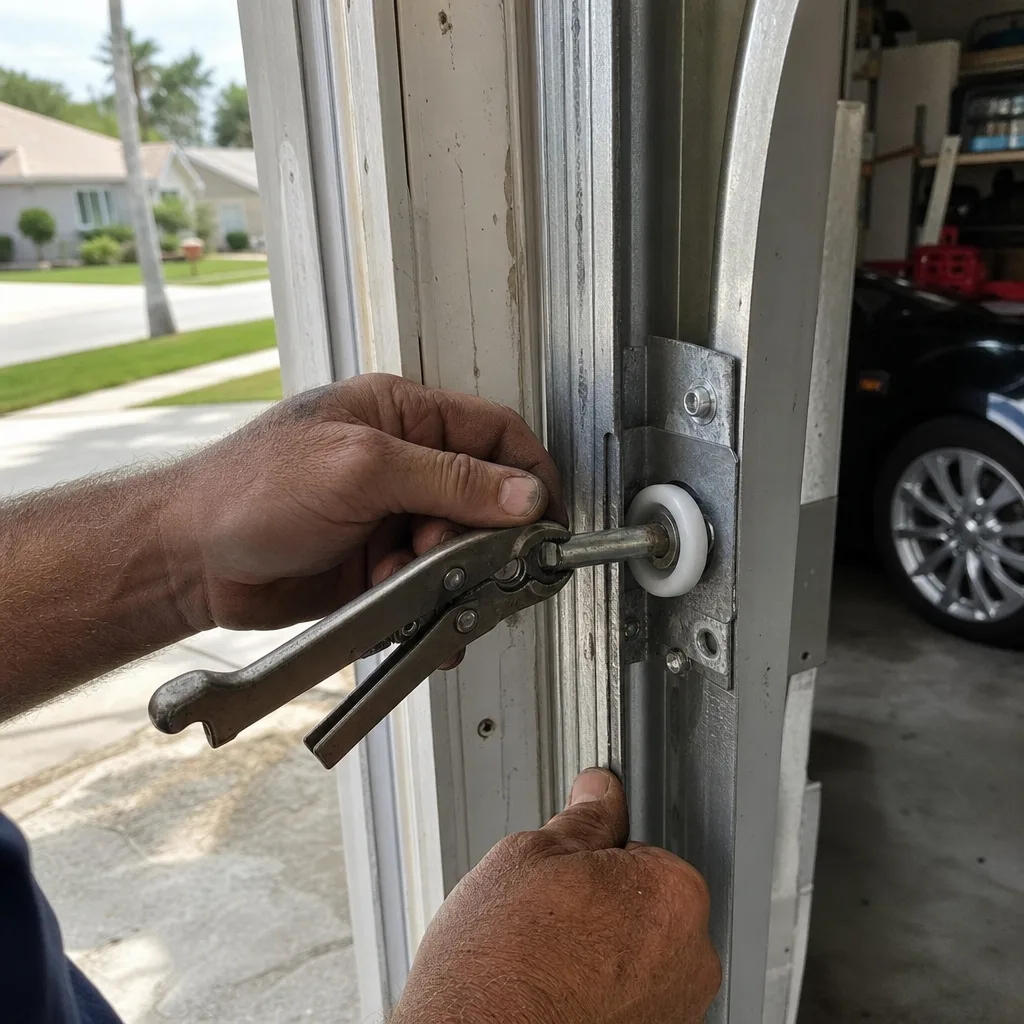
The bottom brackets, where the cables attach, take the most punishment. The fasteners that hold them to the door jamb work loose over time because of the repeated stress of opening and closing, and salt corrosion accelerates the loosening by eating the threads. A bracket with 1/8 inch of play can tear out under wind load, dropping the door and sending a 150-pound panel into whatever is parked below it.
Use a socket wrench to check the fastener torque on both bottom brackets and all four track brackets. You’re not looking for a specific foot-pound reading; you’re looking for movement. If you can wiggle the bracket by hand, the fasteners need tightening. On wood-framed homes in neighborhoods like West Bradenton or Palma Sola, the jamb wood itself can rot behind the bracket, and tightening the fastener into rotted wood does nothing. That’s the point to call a professional.
Bottom Seal Integrity
The rubber or vinyl astragal along the bottom of the door does more than keep out pests and puddles. During heavy rain with wind, a compromised seal turns your garage into a catch basin. Water follows the floor slope toward the interior, reaches drywall, and spreads upward through capillary action. In Bradenton’s older neighborhoods, like the Village of the Arts or parts of Bayshore Gardens, slab floors often slope toward the garage interior because of decades of settling, which makes seal integrity even more critical.
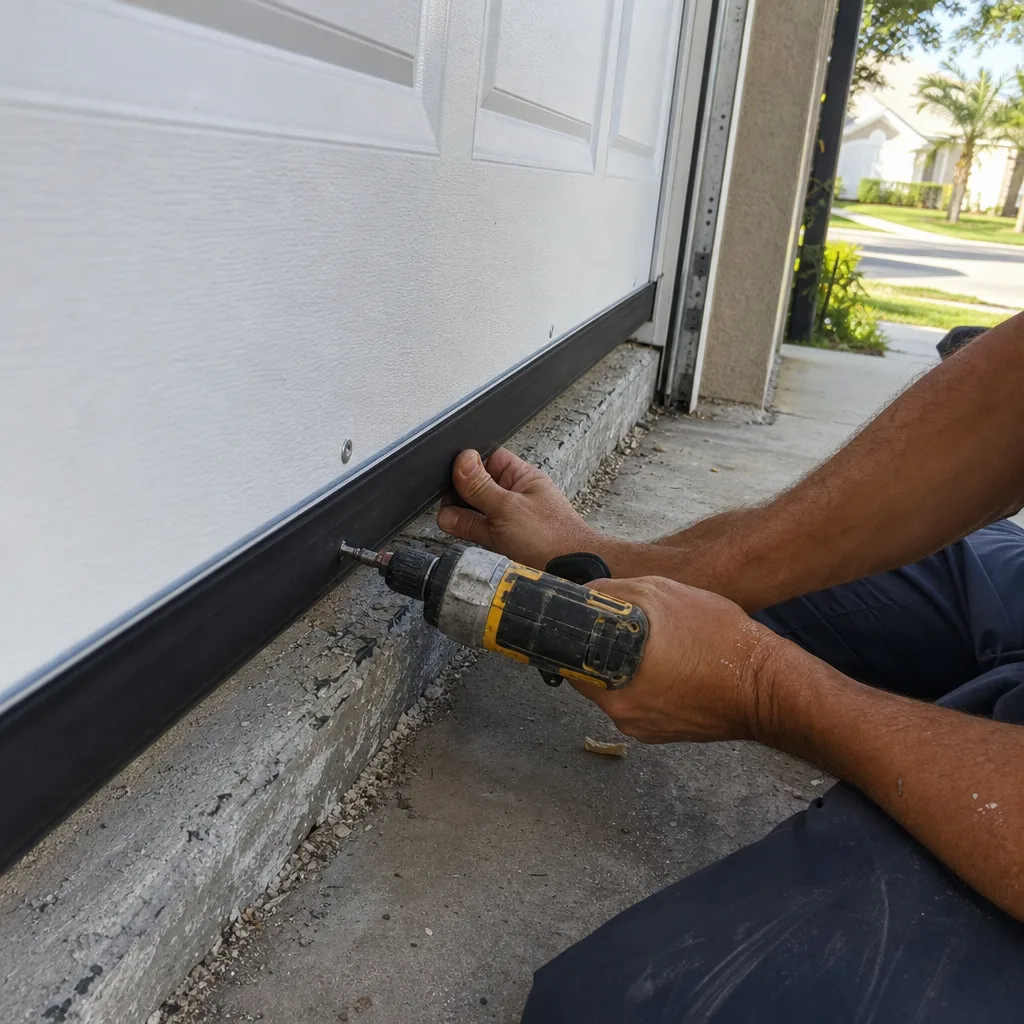
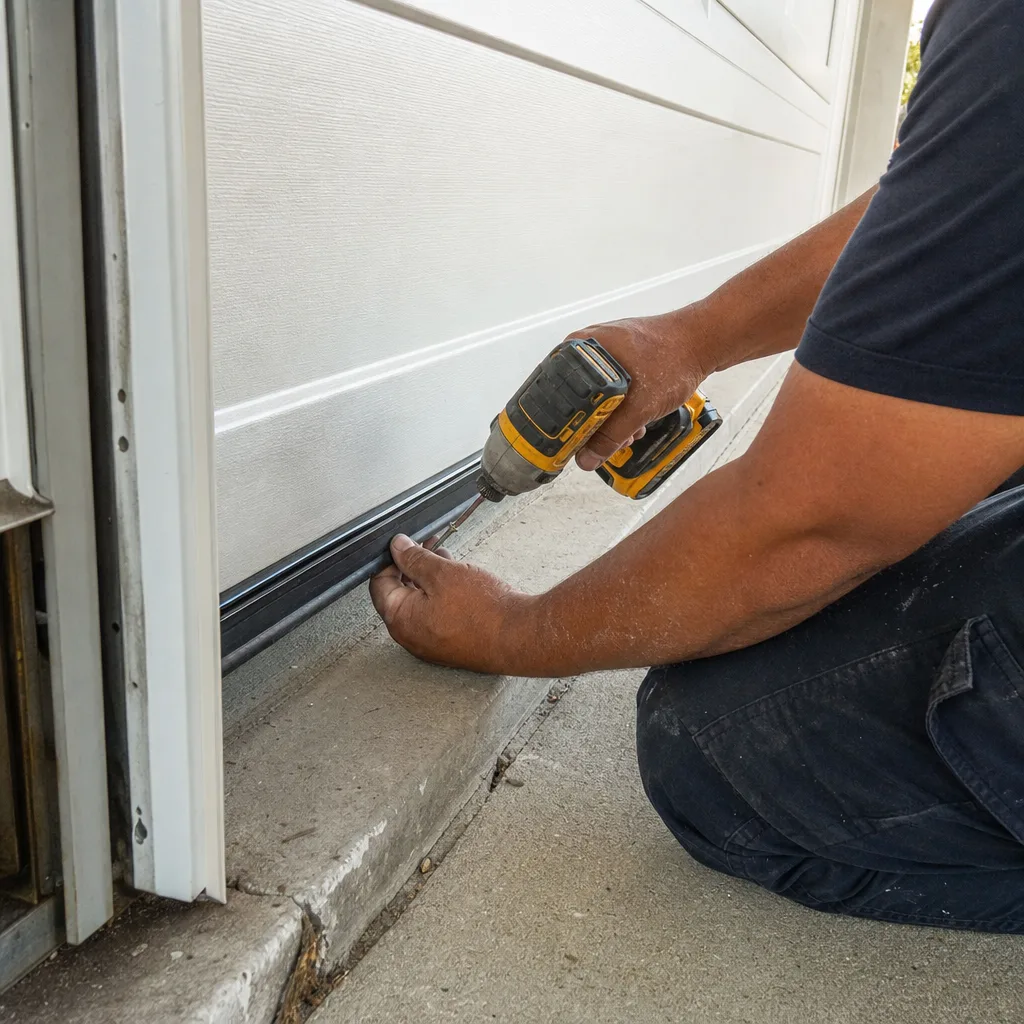
Close the door and check for light gaps along the bottom. Any gap wider than 1/8 inch means the seal is no longer doing its job. You can replace a bottom seal yourself with a flathead screwdriver and 20 minutes, but measure the T-channel width before buying a replacement. Bradenton’s heat means seals harden faster than the manufacturer’s typical replacement interval suggests. Most Bradenton doors need a new bottom seal every 2 to 3 years, not the 4 to 5 years you’ll see on packaging.
Peak Humidity Stretch (June-September): Corrosion Control
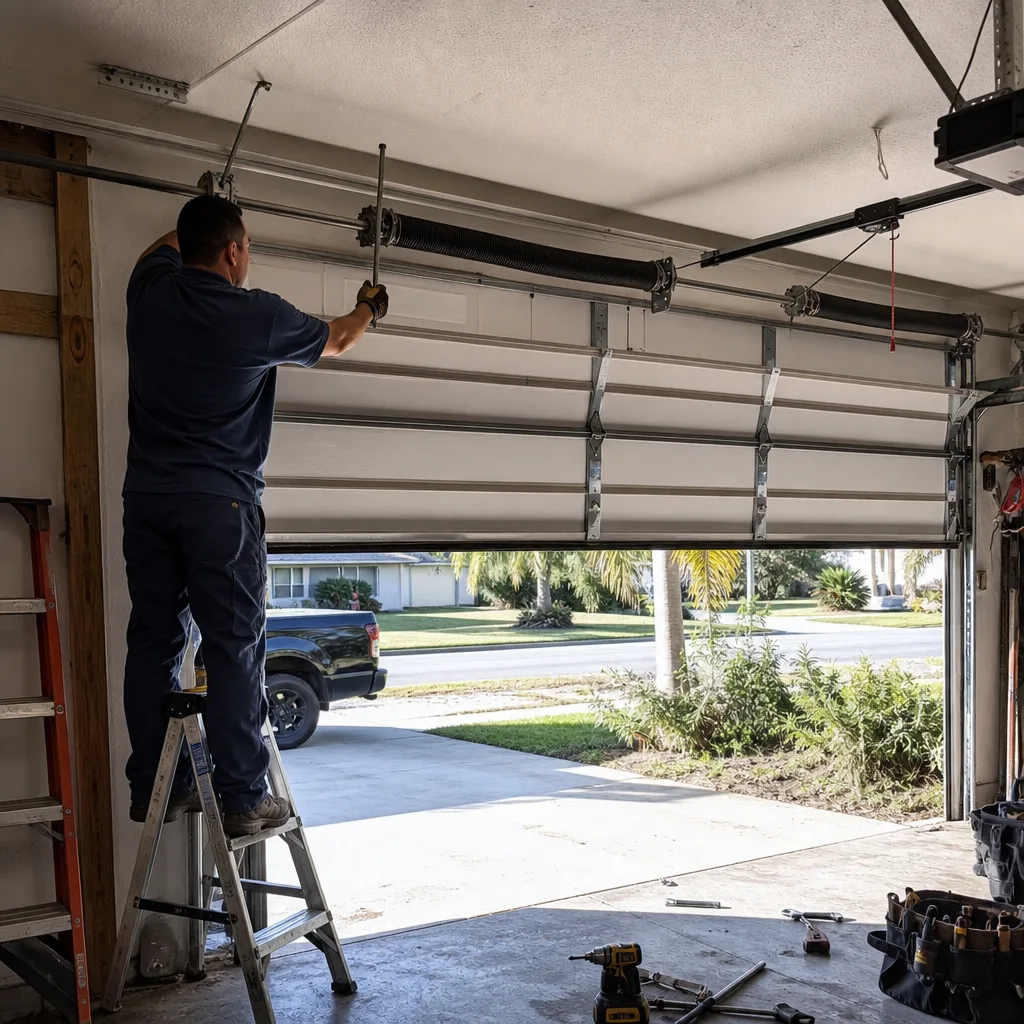
From June through September, Bradenton’s dew point sits above 70 and frequently hits 75 or 76. That means overnight, every metal surface in your garage cools just enough to pull moisture out of the air. By morning, unpainted steel components have a thin film of condensation that contains dissolved salt from the Gulf air. Repeat that cycle 90 nights in a row, and you have corrosion. The question is which components corrode first and whether your maintenance routine slows it down without voiding a warranty.
Which Components Rust First
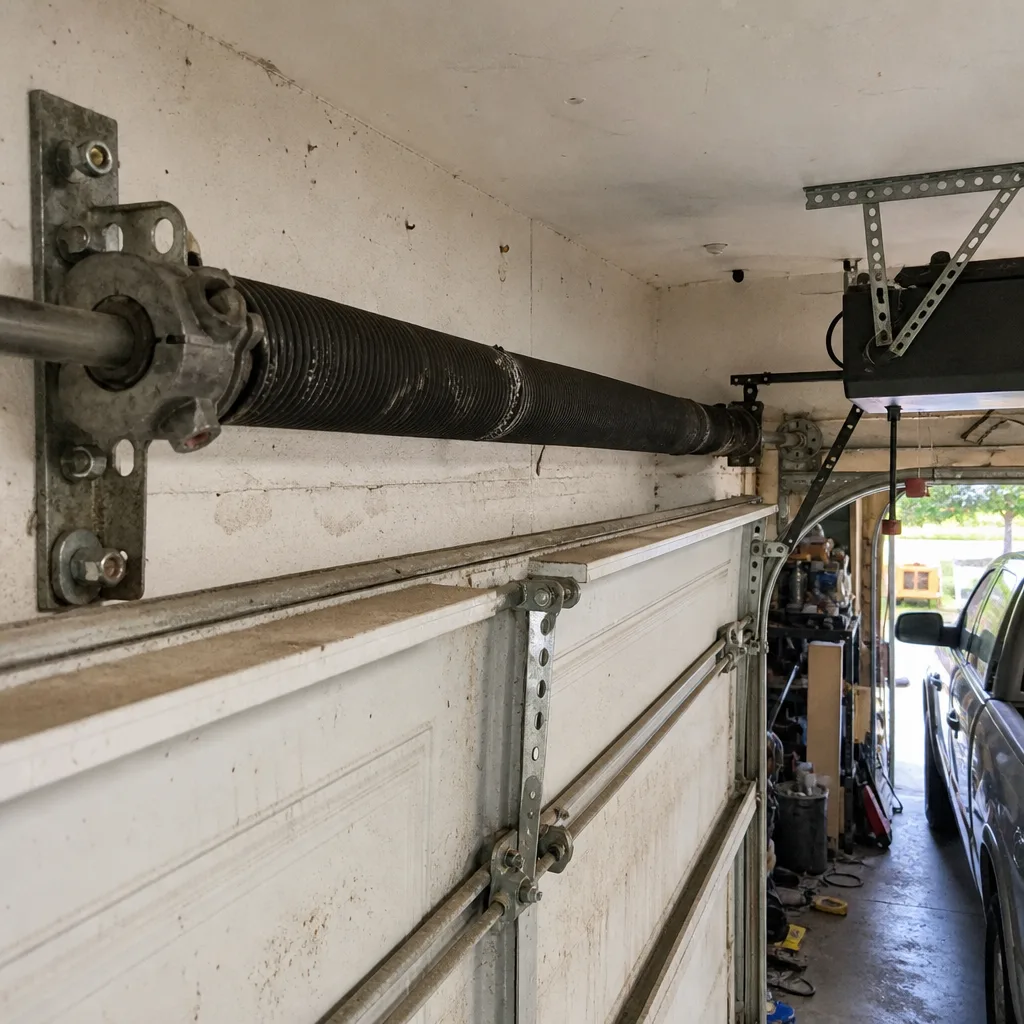
- Springs: Torsion springs are made of oil-tempered steel with a thin oxide coating. That coating is designed to prevent rust during storage and shipping, not for years of salt-humidity exposure. Once the oxide layer breaks down, surface rust appears within weeks. More concerning is pitting, which creates stress risers that shorten spring life.
- Hinges and rollers: The hinge plates are usually zinc-plated, but the plating is thin. Bradenton’s humidity finds the microscopic gaps in the plating and starts the rust clock. Nylon rollers survive well; the steel ball bearings inside them don’t.
- Track hardware: The vertical and horizontal tracks are galvanized, but the fasteners holding them are often zinc-plated only. Rust on fastener heads is cosmetic; rust that spreads to the threads is a structural problem.
- Opener rail: Older opener rails are bare steel. Newer models from Chamberlain and Genie are powder-coated, but scratches from installation or contact with the trolley carriage expose bare metal.
The Lubrication Problem
The standard advice to “lubricate everything” in humid climates creates a specific failure mode: over-lubrication attracts dust and salt, which forms an abrasive paste, which accelerates wear on moving parts. On torsion springs, the wrong lubricant can actually void the manufacturer’s warranty. Most spring manufacturers specify a dry lubricant or nothing at all on the coil surface; wet lubricants trap salt and accelerate pitting.
Here’s the Bradenton-specific corrosion control routine we recommend:
- Springs: Wipe down with a dry microfiber cloth monthly. Apply a light spray of a dry-film lubricant (PTFE or graphite-based) only if you see surface rust beginning. Never use WD-40, motor oil, or lithium grease on spring coils. If you’re unsure about your spring manufacturer’s lubricant policy, leave the springs alone; a rusted spring is replaceable, a warranty voided by the wrong spray is an avoidable cost.
- Hinges: One drop of a lighter synthetic oil (like a 3-in-1 or similar) on each hinge pivot every 60 days. Wipe away any excess immediately. Excess oil becomes a salt trap.
- Rollers: Nylon rollers with sealed bearings need no lubrication. If yours are steel rollers, the bearing area benefits from the same light oil on the same schedule. Do not oil the roller wheel itself; oil on the track is how doors jump the track.
- Track: Wipe the inside surfaces with a dry cloth monthly to remove salt dust. Do not grease the track. The door is not supposed to slide on a lubricated surface; the rollers are supposed to roll.
- Opener rail: If the rail is bare steel, a light coat of white lithium grease on the rail only (not the chain or belt) reduces corrosive wear. If the rail is powder-coated, keep it clean and dry.
Dry Season (November-February): Opener Force Recalibration
Bradenton’s dry season brings the one weather pattern that actually confuses garage door openers: overnight temperature swings. From November through February, daytime highs in the low 70s drop into the upper 40s and low 50s at night. A 20-degree swing is normal. The metal in your torsion springs expands slightly during the day and contracts at night, which changes the effective spring tension by a small but measurable amount. That change translates to the opener’s force sensor reading a different resistance profile at 6 a.m. than it did at 2 p.m.
Most modern openers from LiftMaster, Chamberlain, and Genie have electronic force settings that are supposed to adapt. In practice, the adaptation logic is conservative. It drifts over time as the opener averages cold-morning resistance data into its baseline. By February, many Bradenton openers are either applying too much force (which stresses the door and can mask a developing problem) or too little (which causes mid-cycle reversals that seem random).
How to Recalibrate Without a Service Call
- Disconnect the opener. Pull the emergency release handle with the door closed. The door should move manually with moderate effort. If it’s hard to lift, the springs need attention, not the opener.
- Locate the force adjustment. On most Chamberlain and LiftMaster models, it’s a pair of dials or a menu setting labeled “Force” or “Sensitivity.” Genie models use a similar menu-based system. Check your opener manual for the exact location; do not guess.
- Run the opener through a full cycle. Watch and listen. If the door reverses partway down, the down-force setting is too low. If you hear the motor straining or the door slamming at the bottom, the force is too high.
- Adjust in small increments. Most openers adjust in 1/4 or 1/2 turn at a time. Move the setting slightly, run a full cycle, and observe. Repeat until the door closes fully but reverses easily if you block it with a 2×4 laid flat on the floor.
- Document the setting. Take a photo of the force dials or note the menu values. When the setting drifts again next winter, you’ll know your baseline.
If you’re uncomfortable adjusting force settings, or if the door behaves differently at different times of day in ways you can’t resolve, this is a routine service item. A garage door opener repair and installation call for force recalibration is a 20-minute job, not a major repair.
UV and Heat Effects on Weatherseal and Insulation
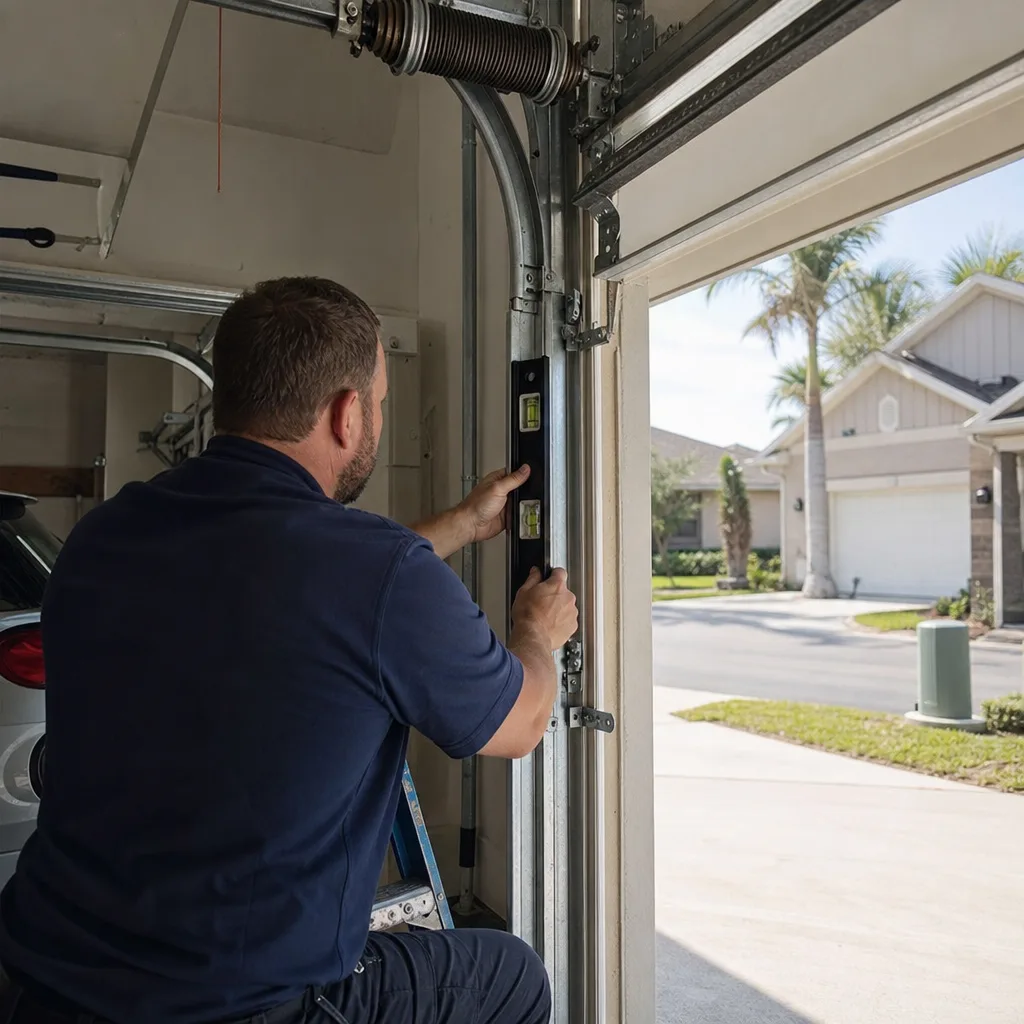
Bradenton’s sun is unrelenting, and it’s not just the heat that matters. The UV index in Manatee County sits in the “extreme” range for most of the summer. That ultraviolet radiation breaks down the polymer chains in vinyl weatherseal, turning flexible rubber into a brittle, cracked strip that no longer compresses against the garage floor. The same UV exposure, combined with sustained heat, accelerates the breakdown of polystyrene insulation panels inside the door sections.
Weatherseal Reality Check
Manufacturers print replacement intervals on weatherseal packaging that assume a temperate climate. A seal rated for 4 to 5 years in Ohio will harden and crack in Bradenton in 2 to 3 years. The failure mode is easy to spot: run your hand along the bottom seal and feel for stiffness. A healthy seal flexes under light pressure; a failed one feels like rigid plastic and may have visible cracks at the corners. The side and top weatherstrip show the same pattern, though they typically last a year or two longer because they’re shaded by the door frame.
Replacement is straightforward, but the part matters. Cheap aftermarket seals are made from lower-grade vinyl that UV-degrades even faster. If you’re doing the replacement yourself, buy an EPDM rubber seal rather than basic vinyl. The Complete Guide to Garage Door in Bradenton covers this in more detail, but the short version is: the cost difference on a 16-foot seal is under $20, and the lifespan is typically 50% longer in Bradenton’s climate.
Polystyrene Insulation and Heat Load
Most Bradenton garage doors built after 2010 use polystyrene insulation panels between the steel skins. Polystyrene is a closed-cell foam, which means it doesn’t absorb moisture, but it does respond to sustained heat. The concern isn’t melting; it’s thermal cycling. Each day the door skin heats to 130°F or more in direct sun and cools overnight. That cycle, repeated thousands of times across a single summer, causes the adhesive bond between the foam and the steel skin to weaken. The panels don’t fall out, but the door’s R-value declines as micro-gaps form.
You can’t reverse this. But you can slow it with one simple action: light-colored exterior paint or a door with a reflective finish. A white door surface runs 15 to 20 degrees cooler than a dark brown or black door in Bradenton’s August sun, and that temperature difference is the primary driver of adhesive breakdown. If you’re choosing a new door, the color decision is a maintenance decision. Garage door installation in Bradenton projects that prioritize light colors and EPDM seals have measurably lower long-term maintenance needs.
The Bradenton Seasonal Maintenance Calendar
Here’s the calendar as a table you can actually use. Print it, stick it inside the garage cabinet, and write the date and photo filename in the documentation column each time you complete a task. The estimated time assumes you have basic hand tools and are working with a standard 16×7 residential door.
Seasonal Task Calendar
- April (1 hour): Pre-storm cable inspection; bracket torque check; bottom seal gap check; track fastener check. Document with photos of both cables, both bottom brackets, and the seal from inside the garage.
- May (30 minutes): Test the opener’s auto-reverse with a 2×4; run a full cycle and listen for grinding, squealing, or uneven speed. Document the force setting with a photo.
- June (30 minutes): First corrosion check of the season. Wipe down springs with a dry cloth; check hinges for rust bloom; apply dry lubricant if surface rust is present. Document spring condition with a close-up photo.
- July (15 minutes): Track cleaning. Wipe inside track surfaces with a dry cloth; check rollers for free rotation. No photos needed unless you find damage.
- August (15 minutes): Bottom seal flexibility test. Run your hand along the seal; check for stiffness or cracking at corners. Document any cracks with a photo.
- September (30 minutes): Post-summer corrosion check. Repeat the June routine; compare photos to June to see if rust is progressing.
- October (15 minutes): Last pre-wind-season check. Verify cables, brackets, and seal after the summer’s thermal stress. Document findings.
- November (30 minutes): Opener force recalibration. Follow the dry-season procedure above. Document your new force setting.
- December-February (15 minutes monthly): Observe door behavior during cold mornings. Note any mid-cycle reversal or uneven speed. Document any anomalies with date logs.
Why Photo Documentation Changes Your Maintenance Game
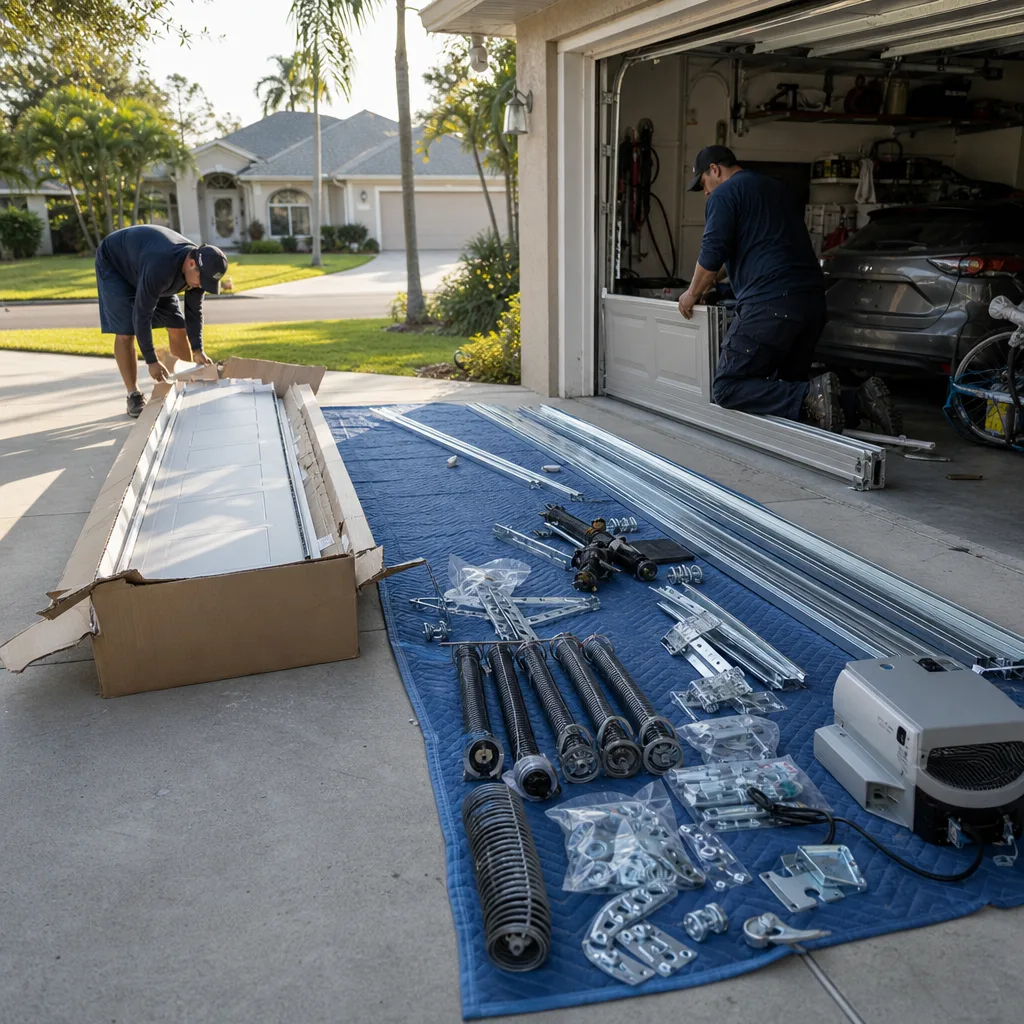
Nothing undermines a maintenance routine faster than selective memory. You checked the cables in April and they looked fine. By August, there’s surface rust. Was it there in April? Was it progressing? Without photos, you’re guessing. With photos, you have a baseline.
Here’s what a dated photo record actually buys you:
- Warranty claims: Most spring manufacturers require evidence of proper maintenance when you file a warranty claim. A dated photo showing clean, rust-free springs from two months prior is far stronger than your memory.
- Service conversations: When you call a technician, you can say “the cable on the right side has shown progressive fraying since my April check” instead of “it looks kind of worn.” That specificity gets you a more accurate diagnosis over the phone and a better-prepared technician.
- Insurance documentation: After a storm, having a dated pre-storm photo record of your door’s condition makes any wind-damage claim materially easier to process.
- Sale preparation: If you sell your Bradenton home, a maintenance log with photos is evidence of diligence that a buyer’s inspector will appreciate.
This documentation habit is the same logic behind the documented photo record that comes with every garage door repair in Bradenton visit from Servo. You should see what failed before anyone quotes a replacement. That principle extends to your own maintenance. Photograph the component. Date the photo. Move on. It takes 30 seconds per task and it changes the quality of every future decision.
Common Mistakes to Avoid
- Lubricating everything with WD-40. WD-40 is a solvent and water displacer, not a lubricant. On springs, it strips the protective oxide layer and accelerates rust. On tracks, it attracts dust and creates a paste that grinds rollers. Use dry-film lubricant on springs and light synthetic oil on hinges only.
- Ignoring a mid-cycle reversal in winter. When an opener reverses halfway down during a cold morning, many Bradenton homeowners assume the safety sensors are misaligned. The more likely cause is the force setting having drifted during the dry season. Recalibrate before replacing anything.
- Replacing springs yourself. Torsion springs hold enormous tension. The tools used to wind them are not what you have in the garage. The injury risk is not hypothetical. A broken spring replacement in Bradenton typically costs $180 to $340 including parts and labor, which is a bargain compared to an emergency room visit. Call someone who does this every day.
- Waiting until November to address summer rust. Corrosion doesn’t pause. Every week that rust sits on a spring coil, pitting deepens. The June-through-September routine above exists because treating rust early is a 15-minute task; treating advanced pitting is a $200-plus replacement.
- Assuming “stainless steel” means corrosion-proof. Most garage door hardware marketed as stainless uses 201-grade stainless, which is corrosion-resistant but not corrosion-proof in salt-air environments. It lasts longer than zinc-plated steel, but it still needs the same seasonal inspection routine.
- Trusting the manufacturer’s weatherseal lifespan. Those numbers are averages across all climates. Bradenton’s UV load cuts seal life roughly in half. Check flexibility every August and expect replacement every 2 to 3 years.
- Skipping the pre-storm bracket check because the door “works fine.” A bracket with loose fasteners will hold the door up under normal operation all year. The failure happens under wind load, which is exactly when you don’t want to discover it. The April bracket torque check takes 10 minutes and it’s the highest-value preventive task on this calendar.
When to Call a Professional
Some maintenance tasks belong on the professional side of the line. Call a qualified technician when you see a frayed cable or broken strand on any lift cable, when a torsion spring shows signs of rust pitting deeper than the surface film, when a bottom bracket moves against the jamb even after tightening, or when the door operates inconsistently at different times of day despite recalibration attempts. Anytime the opener makes a grinding or metallic popping sound during operation, stop using the door and get a diagnosis.
Servo Garage Doors Bradenton offers free estimates throughout the Bradenton area. Call (941) 203-1829 and we’ll inspect the door, document what we find, and give you a flat written price before any work begins. No call-for-a-quote games. The price is on the page, in the email, or both, before we touch a single fastener.
Frequently Asked Questions
A full seasonal check takes 30 minutes to an hour and should happen four times a year, aligned with the April storm-prep window, the June corrosion start, the September post-summer inspection, and the November force recalibration. The high-humidity months from June through September benefit from an additional light check monthly. The calendar above gives a task-by-task schedule.
Yes. Homes west of 41, in neighborhoods like West Bradenton, Palma Sola, and Anna Maria Island, get direct Gulf salt exposure, and even inland Bradenton sees measurable salt deposition from morning humidity cycles. The damage is slow and cumulative: springs rust, hinge plates corrode, cables fray, and fastener threads strip. The corrosion control routine in the June through September section is designed to slow that progression measurably.
Typical torsion spring replacement in Bradenton runs $180 to $340 for a standard residential door, including the spring, labor, and a balance check after installation. Dual-spring systems run higher, typically $270 to $430. The range depends on spring size, door weight, and whether additional hardware needs attention. For an exact quote on your specific door, call (941) 203-1829. The price you’re quoted is the price you pay, in writing, before any work starts.
Yes, and it’s one of the few maintenance tasks where the DIY path makes sense. Buy an EPDM rubber seal (not basic vinyl), measure your T-channel width before purchasing, and budget 20 minutes for installation. The old seal slides out of the channel at the bottom of the door; the new one slides in. The main risk is buying the wrong width, which is why the measurement comes first.
Most residential garage door openers last 10 to 15 years. The concern in Bradenton is less about mechanical age and more about electronic degradation from heat and humidity cycling. If your opener’s force settings drift repeatedly, the logic board shows intermittent behavior, or the door occasionally fails to respond to a command, the electronics are likely degrading. A garage door opener repair and installation assessment will tell you whether a repair or replacement makes sense. Openers from Chamberlain, Genie, and LiftMaster are all serviceable, but replacement is often more cost-effective once electronics begin to fail.
No. Torsion springs are set for the door’s weight and should not be adjusted based on season. The dry-season opener force recalibration we describe affects the opener’s settings, not the springs themselves. If your door feels harder to lift manually in cooler weather, that’s a spring issue, not a seasonal adjustment issue, and it means the springs are losing tension or the door’s balance has changed. That warrants a professional inspection, not a DIY adjustment. The springs hold dangerous tension; the winding cones should only be touched by someone with the right tools and training.
The Bottom Line
Bradenton’s garage door maintenance calendar runs on four seasons that don’t match the national advice: a storm-prep window in April and May focused on wind-load hardware, a corrosion-control stretch from June through September targeting steel components, a dry-season opener force recalibration from November through February, and a year-round weatherseal inspection driven by UV degradation rather than freeze-thaw cycles. The tasks are small and specific: check cable tension, torque bracket fasteners, dry-wipe springs monthly, recalibrate opener force in winter, and replace weatherseal every 2 to 3 years. Document each task with a dated photo. When something fails beyond the maintenance scope, call (941) 203-1829 for a free estimate from Servo Garage Doors Bradenton. You’ll get a flat written price and a documented record of what was found and what was done.
Written by Marcus Deller, Owner at Servo Garage Doors Bradenton, serving Bradenton since 2015. Explore more guides & resources for local homeowners.