
Last updated September 20, 2026
Full 25-point door and opener safety check with every visit - springs, cables, rollers, tracks, and your LiftMaster or Chamberlain opener included
You get a price before we start. It does not change when the truck arrives.
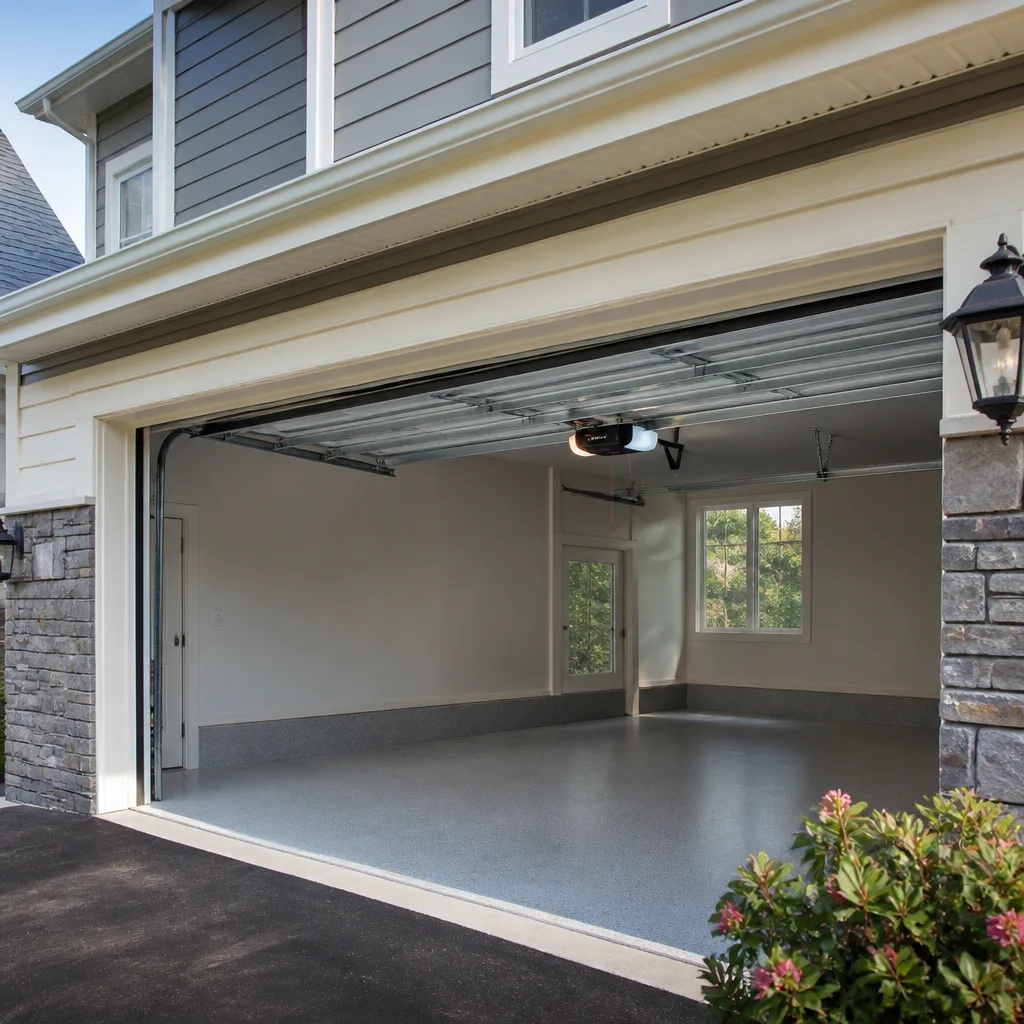
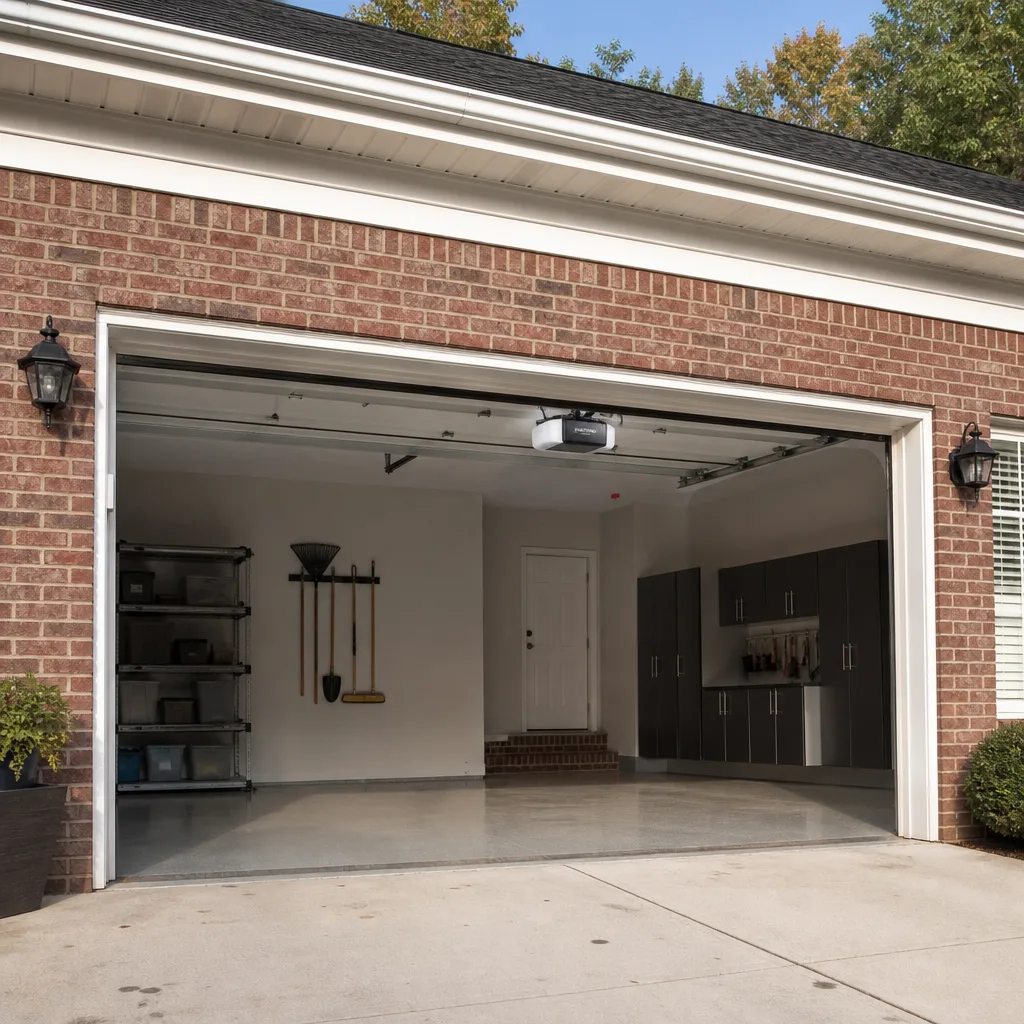
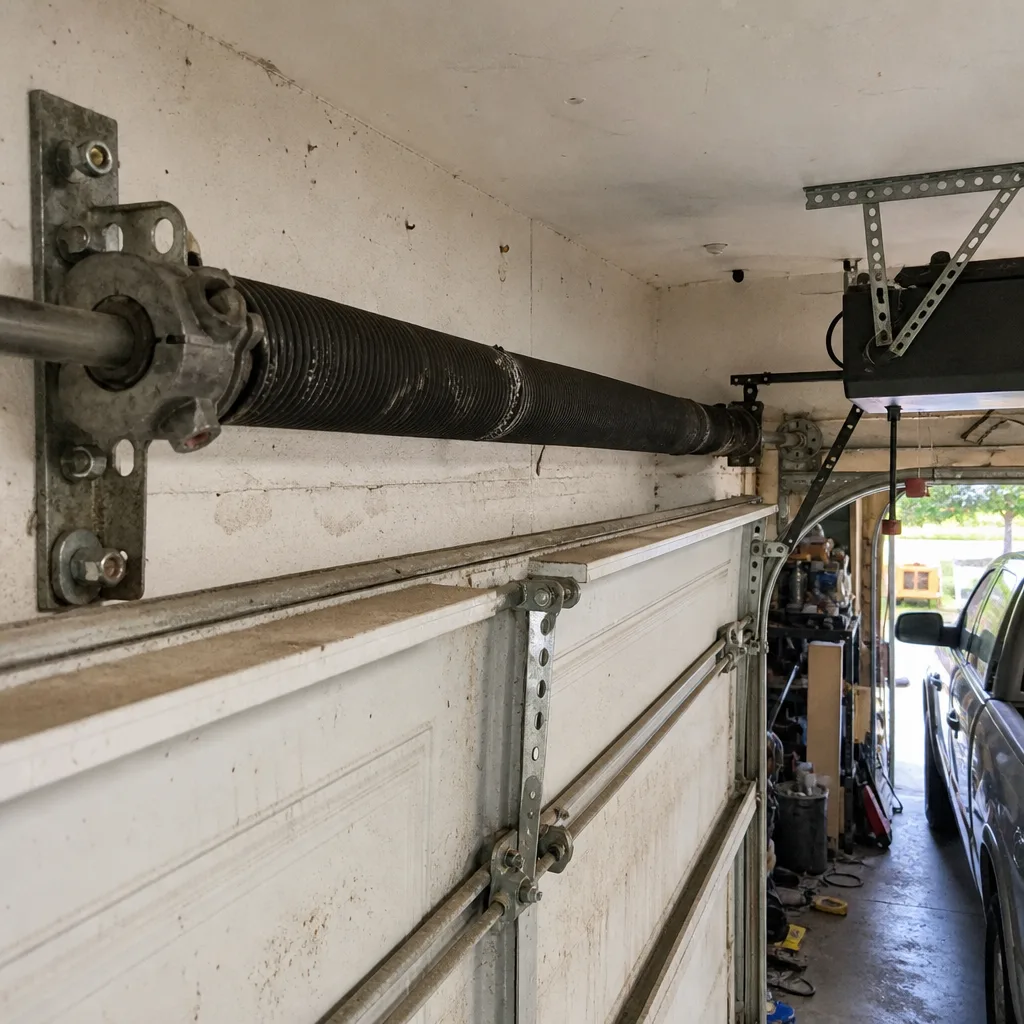 Before
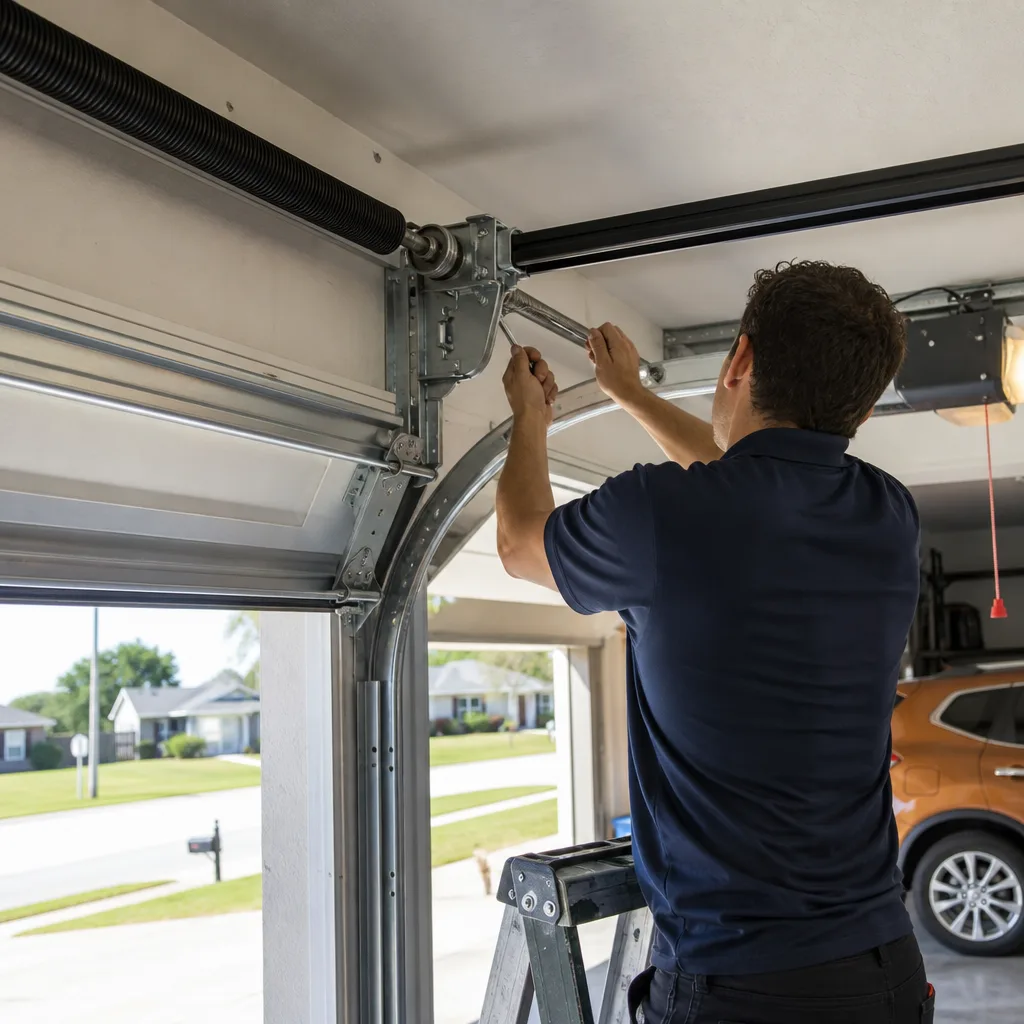 After
After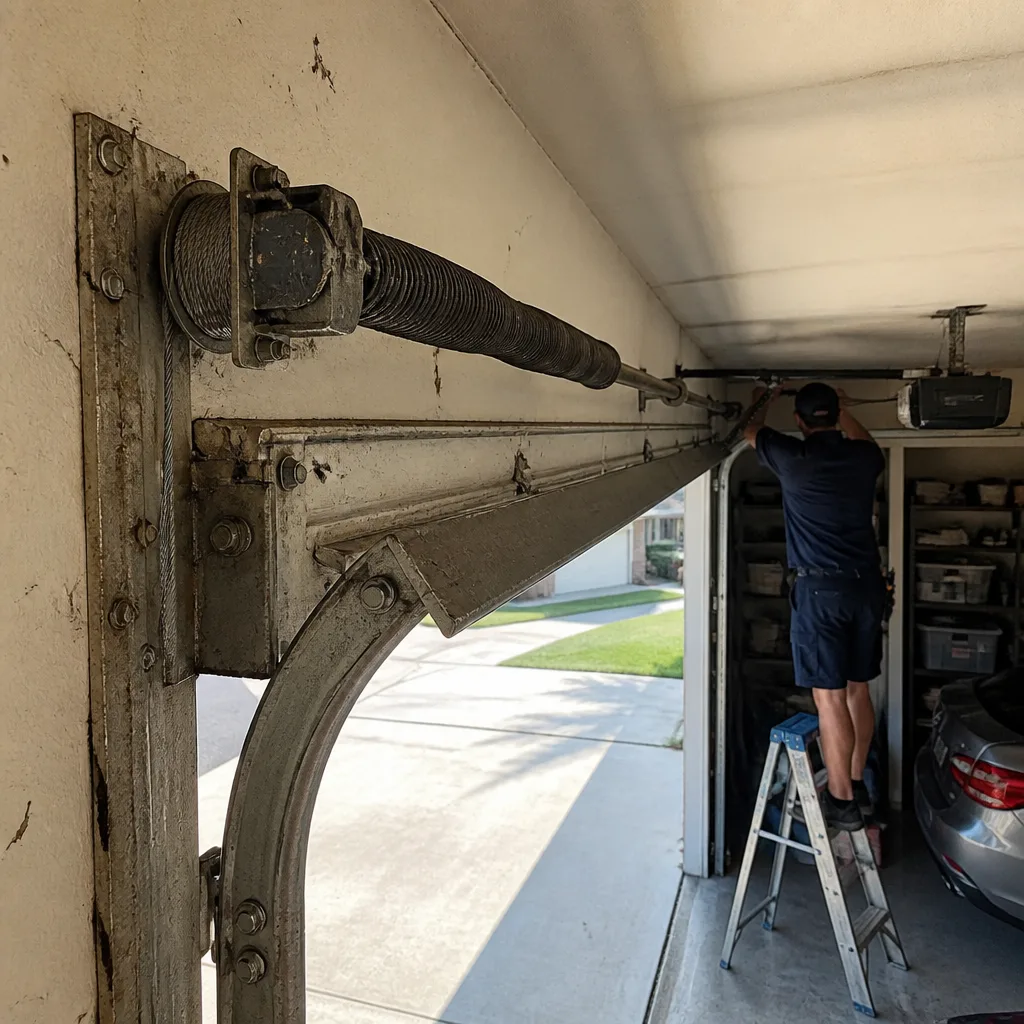 Before
 After
After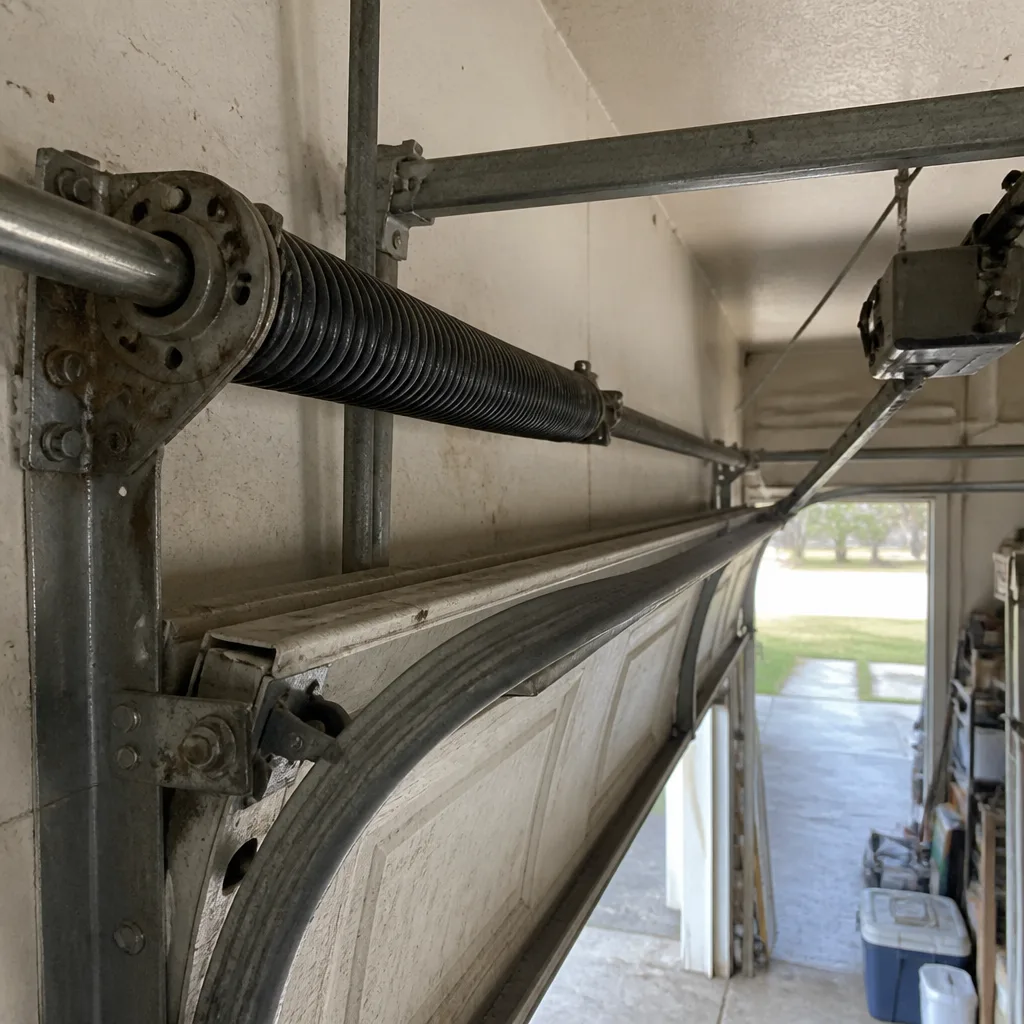 Before
 After
AfterDIY vs Professional Garage Door: The Bradenton Homeowner’s Decision Guide
Here’s the number that should frame every DIY garage door decision: between 1990 and 2007, U.S. emergency rooms treated an average of 13,000 injuries per year caused by garage door components, with torsion spring failures accounting for a disproportionate share of the serious ones. That’s not a liability lawyer’s talking point. It’s the CPSC’s own injury surveillance data, and it tells you something most DIY guides won’t say plainly: the question is not what a repair costs. The question is which side of a specific risk line the repair sits on. In Bradenton, where salt air and afternoon humidity accelerate spring fatigue, that line matters even more. This guide draws the line at the component level, not the task label, so you can decide with your eyes open.
Quick Answer
Most garage door maintenance is owner-serviceable: lubrication, weatherseal replacement, sensor alignment, and keypad programming can be handled with basic tools in under an hour. For more guidance, see our Garage Door Repair Maintenance Checklist for Bradenton Homeowners. But anything that touches a torsion spring, lift cable, or load-bearing track is professional-only work in Bradenton, not because it requires rare skill but because the stored energy in those components turns a slipped tool into an ambulance call. If your repair involves a spring, call a professional. If it doesn’t, keep reading.
Table of Contents
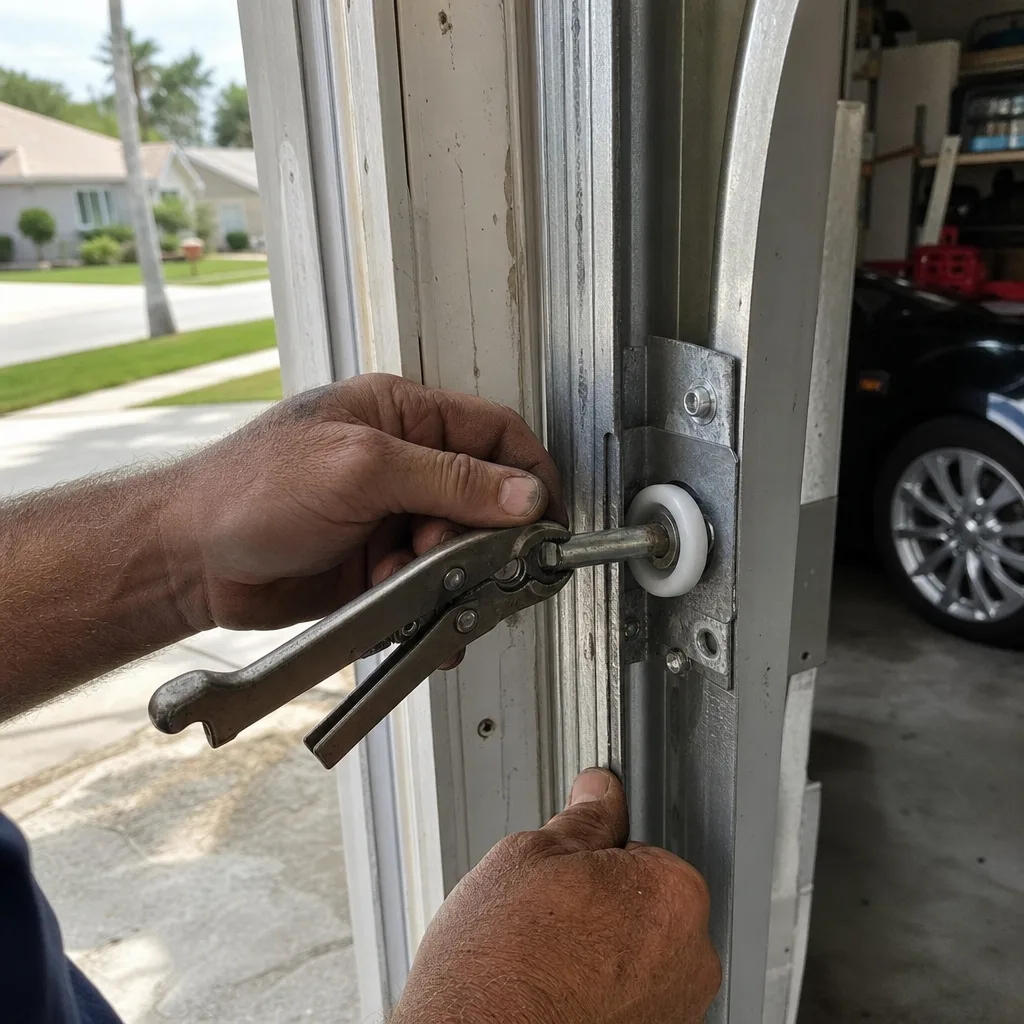
- The Risk Classification: Sorting Tasks by Component, Not Label
- What the CPSC Data Actually Says About Garage Door Injuries
- Owner-Serviceable Tasks: The Full List With Tools and Time
- Professional-Only Tasks: The Line and Why It Exists
- Bradenton Building Code and Wind-Rated Doors: Where DIY Is Legally Off the Table
- The Honest Cost Comparison: Factoring the Second-Call Rate
- The Decision Framework: Four Questions Before You Touch Anything
- Common Mistakes to Avoid
- When to Call a Professional
- Frequently Asked Questions
BeforeAfterThe Risk Classification: Sorting Tasks by Component, Not Label
The DIY-versus-professional debate usually gets framed around cost: what does a spring replacement cost versus what does it save to do it yourself? That framing misses the point. The correct frame is risk classification, and the classification has two buckets.
Bucket one is owner-serviceable work. These are tasks where the failure mode is benign: a part that comes loose, a seal that cracks, a sensor that drifts out of alignment. If you make a mistake, nothing catastrophic happens. The door might not work as smoothly, or a draft returns. You can redo the work without consequence. These tasks reward someone who follows instructions carefully and owns a basic tool set.
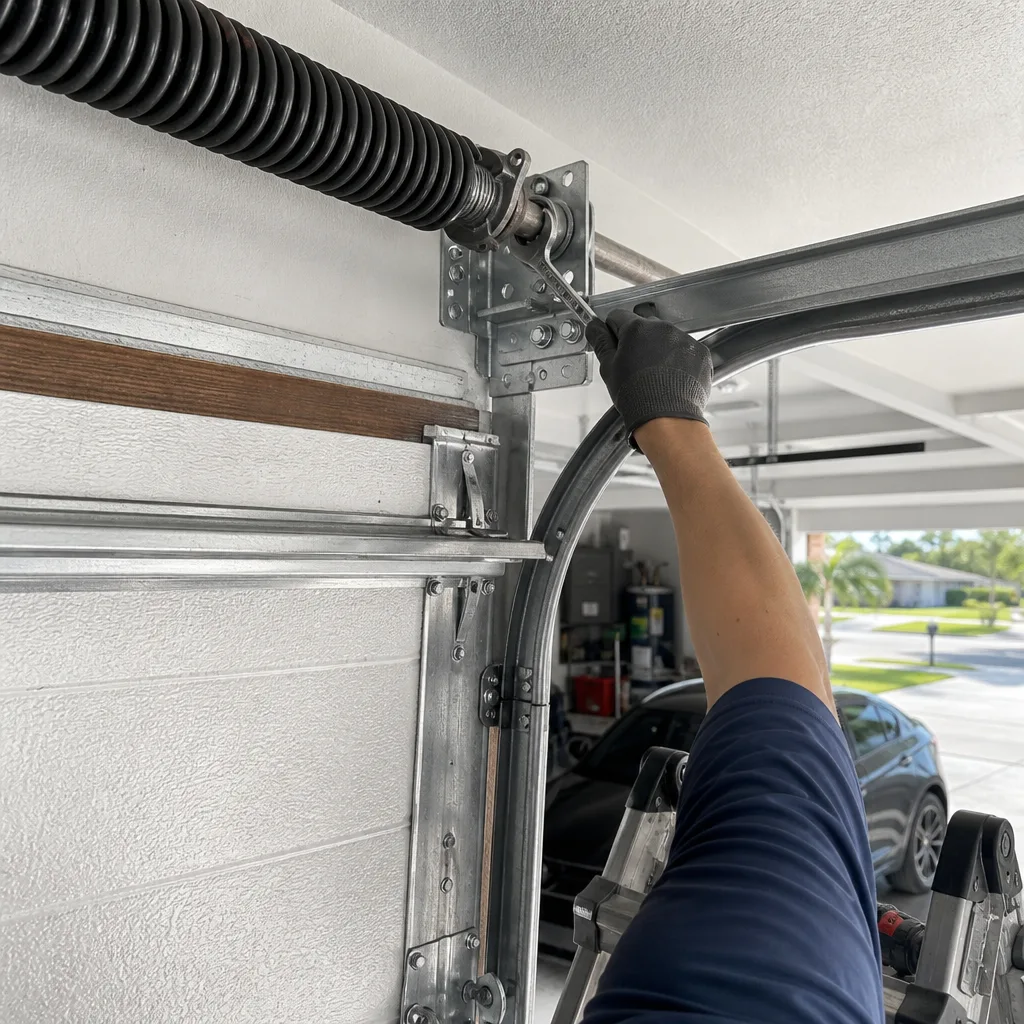
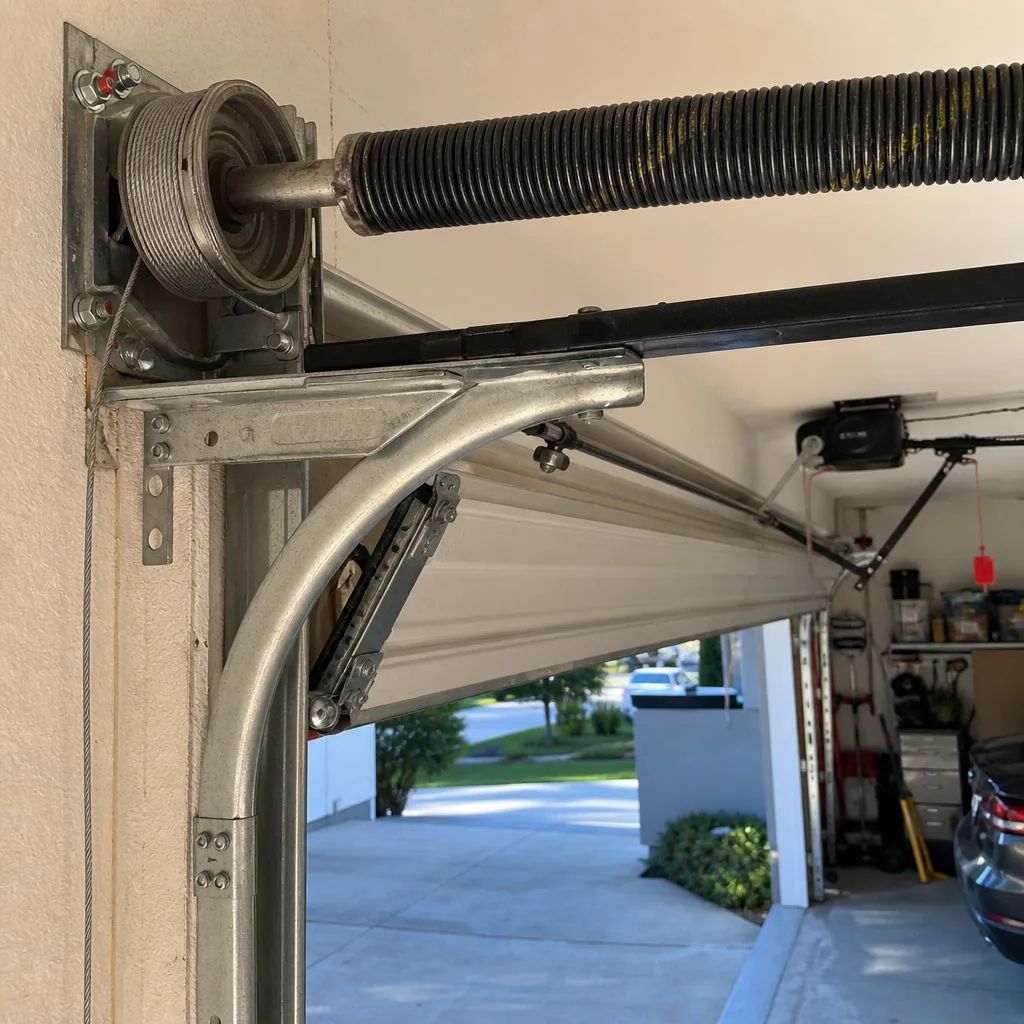
Bucket two is professional-only work. These tasks involve components under mechanical tension, the most dangerous being the torsion spring, which sits on a metal shaft above the closed door and stores the rotational energy used to lift the door’s weight. When a torsion spring breaks, the energy releases audibly; when someone works on a wound spring and the winding bar slips, the energy releases into whatever is in its path. That includes hands, wrists, and faces. Cables under similar tension, and tracks that bear the full loaded weight of a mid-century or modern double-wide door, carry the same failure profile.
In Bradenton, we see this distinction play out in repair volume every season. The humidity accelerates corrosion on springs and cables, particularly in older neighborhoods like West Bradenton and Palma Sola, where many doors date to the 1990s and early 2000s. When those springs fail, homeowners often arrive at the same initial thought: how hard can this be? The answer is that the work itself isn’t the hard part. The consequences of a slip are.
This guide doesn’t tell you to never pick up a wrench. It tells you which wrench to pick up and which ones to leave on the pegboard.
What the CPSC Data Actually Says About Garage Door Injuries
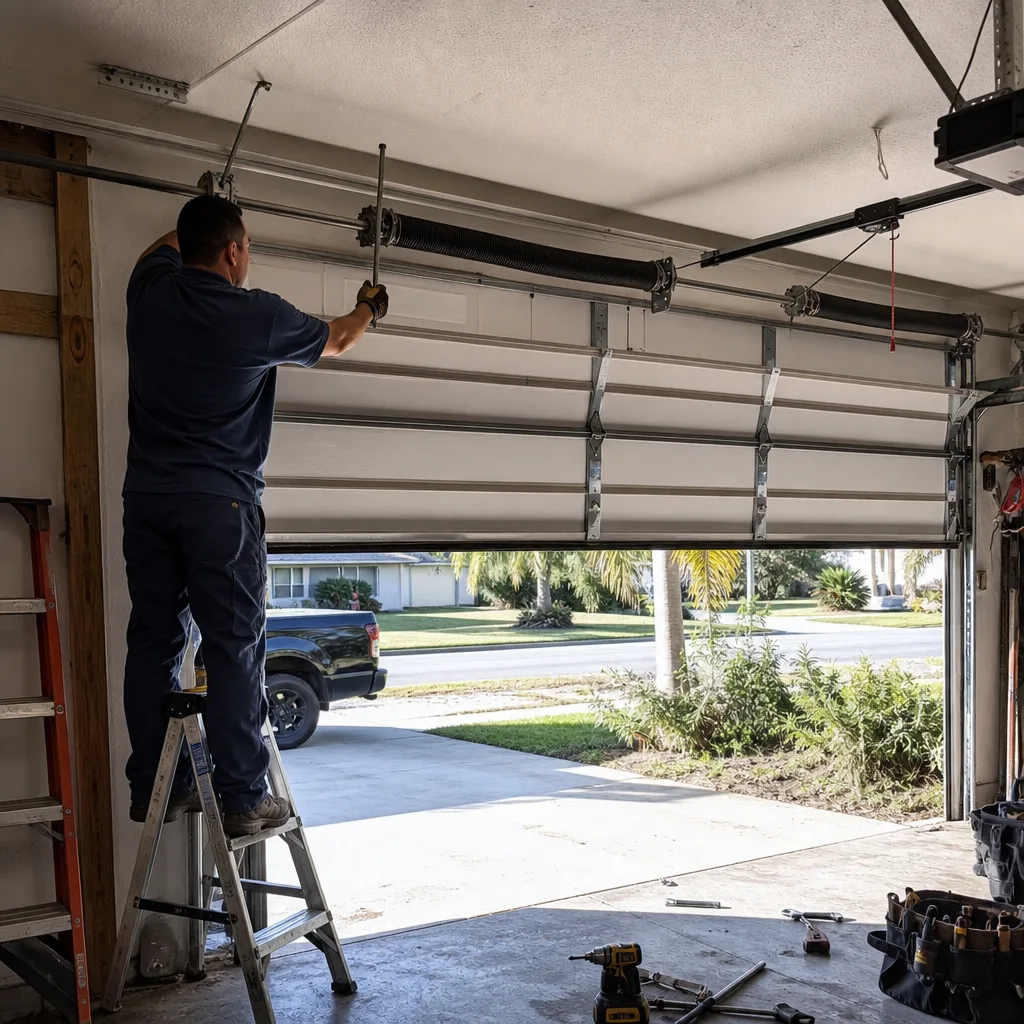
The U.S. Consumer Product Safety Commission maintains a national injury surveillance system that tracks emergency department visits tied to specific product categories. Garage doors have their own category, and the data is not ambiguous. Between 1990 and 2007, the CPSC recorded an average of 13,000 injuries per year requiring emergency room treatment for garage door-related incidents. Torsion springs, cables, and door panels under load accounted for the majority of serious injuries, including fractures, amputations, and crush injuries.
What’s notable is the distribution. A meaningful share of injuries occur not during the installation of a new door but during repair attempts on existing hardware. The mechanic is tired, the spring is rusted, the light is poor, and the winding bar slips. That specific sequence of conditions is present in a large fraction of the documented cases.
This isn’t a caution against all DIY work. The same CPSC dataset shows that lubrication, sensor adjustment, and seal replacement produce almost no serious injuries. The risk is concentrated in the spring and cable category, which is why a binary framework, spring-involved versus not spring-involved, is the single most useful way to make the DIY call.
For Bradenton homeowners, the additional variable is corrosion. A spring that has spent eight or nine years in salt-adjacent humidity doesn’t behave like the clean, freshly coated spring in a YouTube tutorial. The friction on a winding cone threads its way through air that carries moisture from the Gulf, and the result is a part that can bind exactly when you’re applying torque. Owners in flood-zone-adjacent neighborhoods like Palmetto Point and Riverview Boulevard should assume their spring hardware is more corroded than it looks, which increases the risk of binding during a winding attempt.
Owner-Serviceable Tasks: The Full List With Tools and Time
Several garage door tasks are genuinely safe to handle with modest skill and standard tools. We’ll name the actual components, the tools, the realistic time commitment, and the outcome you should expect if you do the work carefully.
1. Weatherseal Replacement
The bottom weatherseal is a rubber or vinyl strip that slots into a channel on the bottom of the door. In Bradenton, these crack within three to five years from heat and salt exposure. Replacement takes about 30 minutes with a utility knife, a flathead screwdriver, and some dish soap for lubrication. You pull the old seal out, clean the channel, slide the new one in. The outcome is a door that seals against rain intrusion during summer storms, which matters for any garage used for storage or as a workspace. If the replacement doesn’t seat properly, no harm done: pull it out and redo it.
2. Lubrication
A can of white lithium grease or a dedicated garage door lubricant, applied to rollers, hinges, and the torsion spring coil surface, takes 20 minutes and should be done twice a year in Bradenton’s coastal climate. Avoid WD-40, which displaces moisture but doesn’t leave a lasting lubricating film. Lubricating the spring coil is which has relevance here: the spring itself doesn’t require you to touch it under tension. You’re applying lubricant to the surface, which is perfectly safe. If you hear grinding or the door bounces during operation, the issue is not a lubrication deficiency and this task won’t fix it.
3. Photo Eye Sensor Alignment
The photo eyes sit on either side of the door opening, about six inches off the ground, and send an infrared beam between them. When a Bradenton rainstorm splashes mud onto a lens or a lawn mower clips a bracket, the beam misaligns and the door refuses to close. The fix is straightforward: check for blinking indicator lights, wipe the lens with a soft cloth, and gently adjust the bracket until both lights hold steady. No tools beyond a cloth and maybe a screwdriver for the bracket. This is the most common false alarm we see, and homeowners can resolve it in minutes.
4. Keypad Programming
Wireless keypads from LiftMaster, Chamberlain, Genie, and Craftsman all follow a similar programming sequence: press the learn button on the opener motor head, enter a PIN on the keypad within 30 seconds, and test the door. The specific sequence varies by model, so the owner’s manual or a two-minute video is genuinely useful here. If the keypad won’t program, the issue is usually a dead battery or a model mismatch, not something that requires a technician.
5. Visual Inspection
Once a quarter, stand inside the garage and run the door through a full cycle. Watch for jerky movement, listen for grinding or popping, and look at the spring coils for gaps or rust bloom. You won’t fix anything by watching, but you’ll know when a spring is about to fail, and that knowledge transforms the cost of the repair from an emergency call to a scheduled visit. In Bradenton, we see a pronounced failure spike in August and September after months of heat and humidity, so a mid-summer inspection is particularly useful.
Each of these tasks has a benign failure mode. If you get the weatherseal wrong, the door leaks. If you misalign the sensors, the door won’t close. Nothing in this bucket can hurt you, and the learning curve is shallow.
Professional-Only Tasks: The Line and Why It Exists
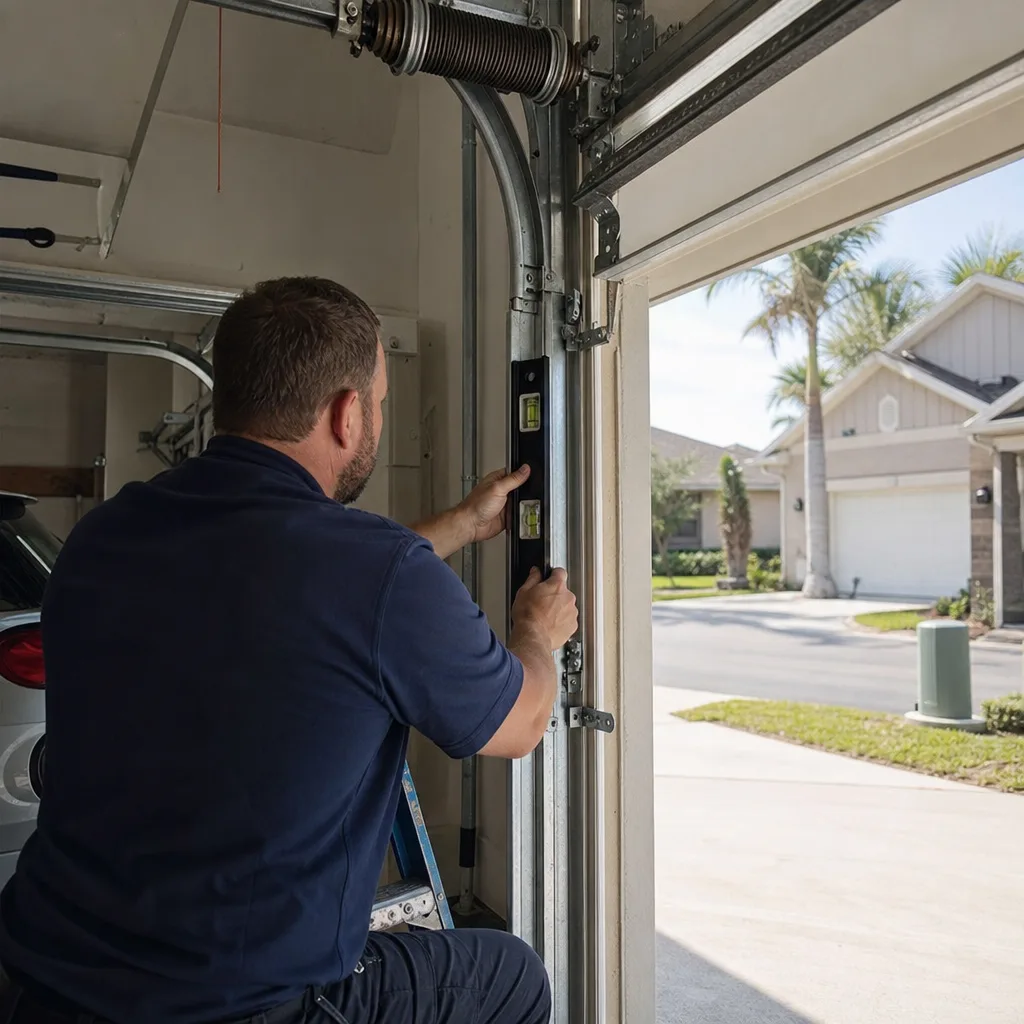
Now the line. The following tasks are professional-only, not because a homeowner can’t understand how they work, but because the physical risk of a mistake is severe and the cost of the mistake is measured in a trauma bay, not a return trip to the hardware store.
Torsion Spring Replacement
A wound torsion spring stores roughly the full lifting weight of the door in rotational energy. On a double-wide door, that can exceed 250 pounds of force distributed across the coils. The spring is tightened and loosened using two steel winding bars inserted into the winding cone, and if one of those bars slips while under tension, the bar becomes a projectile with enough force to fracture a wrist, penetrate drywall, or worse. The physics doesn’t change based on confidence level. We say this as plainly as we can: replacing or adjusting a torsion spring is not a cost question. The $200 to $350 a Bradenton technician charges for the job is not the decision variable. The decision variable is whether the risk of a slipped bar is acceptable, and for anyone without specific training and the right-length winding bars, the answer is no.
Lift Cable Replacement
The lift cables run from the bottom brackets up the sides of the door and around drums at the top. They carry the door’s weight during every single cycle, and when they fray or snap, the door can fall unevenly, which is its own crush hazard. Replacing a cable requires removing tension from the system, which means dealing with the spring first. This is not a standalone repair; it’s a spring-system repair with extra steps.
Track Realignment Under Load
The vertical and horizontal tracks guide the door’s rollers through every cycle. If a track is bent or a bracket has pulled loose from the wall, the door can bind mid-cycle. Realigning a track means loosening the hardware while the door is still under spring tension, which places the technician directly in the potential fall path if the door shifts. We perform this work with the door locked in place and the spring system secured, which is not how a homeowner is going to approach it without the right equipment.
Opener Replacement on High-Cycle Doors
Installing a new opener from LiftMaster, Chamberlain, or Raynor on a door that cycles frequently, think a family with two working adults and two teenagers coming and going all day, requires careful travel-limit and force-setting adjustments. The opener’s internal settings determine how the door behaves when it encounters an obstruction, and a misconfigured force setting can turn a closing door into a crushing hazard. Opener installation is a task many homeowners can complete, but it sits closer to the professional line than lubrication does, particularly if the existing opener is hardwired into the electrical supply.
Bradenton Building Code and Wind-Rated Doors: Where DIY Is Legally Off the Table
Bradenton sits in a high-velocity hurricane zone under the Florida Building Code, which means garage doors in most of the city must meet wind-load ratings specified by the code. See Garage Door Permits, Codes & Inspections in FL: What You Need to Know for details. For homeowners, this has direct implications for the DIY-versus-professional decision, because some repairs and replacements on wind-rated doors require a licensed contractor to maintain code compliance and insurance validity.
The relevant section is the Florida Building Code’s wind-borne debris provisions, which apply to homes in the HVHZ and wind-borne debris regions. A garage door that has been wind-rated and installed with a product approval number must be repaired and replaced with components that match the original listing. If a homeowner swaps a spring, strut, or panel for a component that doesn’t match the approved assembly, the door’s wind rating is no longer valid. For insurance purposes, that’s a problem: a claim after a storm can be denied if the door was modified outside the approved configuration.
This doesn’t affect every repair. Lubrication, weatherseal replacement, and sensor alignment don’t touch the structural components of a wind-rated door and remain owner-serviceable. But any structural repair, a cracked panel, a bent strut, a track that’s pulled loose during a storm, sits squarely in the professional category for both safety and compliance reasons. This is particularly relevant in Bradenton neighborhoods east of 41, where older homes were built before the modern wind-load provisions and may have doors that need upgrades rather than repairs.
The practical takeaway is simple: if the component you’re considering working on has any structural role in the door’s wind resistance, you need a licensed contractor, not a wrench set. The code doesn’t exist to make life difficult; it exists because a failed garage door is the most common point of catastrophic roof loss in a hurricane, and the pressure differential that blows a roof off starts with a garage door that gives way.
The Honest Cost Comparison: Factoring the Second-Call Rate
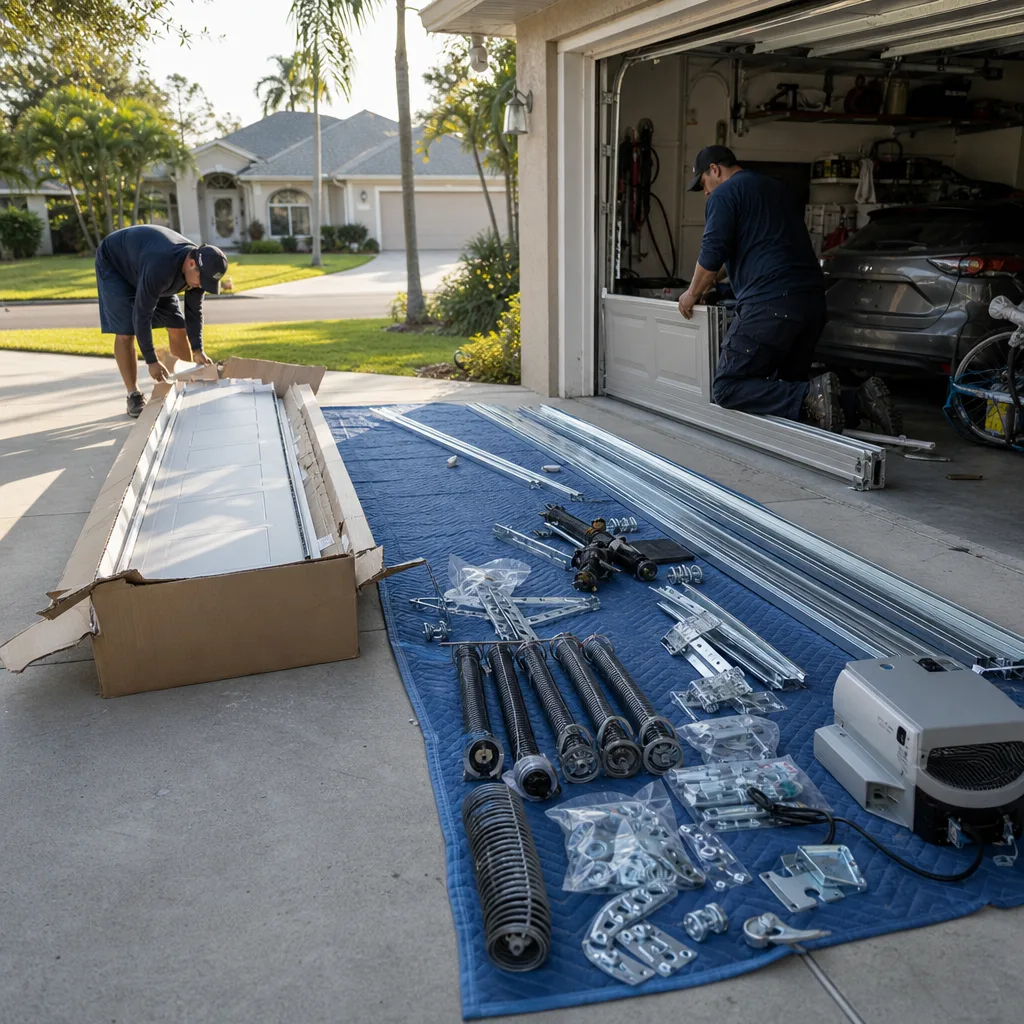
The DIY cost comparison usually looks like this: a torsion spring costs $80 to $120 online, a professional charges $250 to $350, so the DIY savings is roughly $170 to $230. That math is accurate as far as it goes. What it doesn’t include is the second-call rate: the probability that a homeowner-installed spring is improperly wound, incorrectly sized, or installed with the wrong winding-bar technique, leading to a professional visit to correct the work.
We’ll be specific about what we see in Bradenton. Homeowner-installed torsion springs arrive in front of our technicians with one of three common problems: the spring is wound to the wrong tension, so the door won’t stay balanced; the spring is the wrong wire diameter for the door’s weight, so it fails again in under a year; or the winding cone wasn’t set properly, so the spring has worked itself loose from the shaft. Each of those scenarios requires a second repair, and the homeowner has now paid for the online spring, the tools, the time, and the professional visit to correct the work. The total cost exceeds the professional quote from the start.
The same pattern holds for lift cables. A homeowner-replaced cable that isn’t seated perfectly in the drum groove will fray within weeks, and the subsequent failure can damage the drum itself, which is an additional $80 to $150 part. The cable itself costs $25. The savings evaporate quickly.
Now compare this to the genuinely owner-serviceable tasks, where the second-call rate is near zero because the failure mode is benign. A weatherseal that costs $40 and takes 30 minutes to replace produces clean savings with almost no risk of a corrective visit. Lubrication costs $15 for a can that lasts two years. Sensor alignment costs nothing but a cloth. This is where the DIY math works, and it works well.
The honest cost comparison factors in the probability of a second professional visit. For owner-serviceable tasks, that probability is low and the DIY decision is sound. For professional-only tasks, the probability is high enough that the “savings” is typically negative. In Bradenton specifically, where spring corrosion adds unpredictability to the installation process, the probability skews even further toward the professional call.
The Decision Framework: Four Questions Before You Touch Anything
Here’s the framework we recommend to every Bradenton homeowner who’s standing in the garage, looking at a problem, and weighing whether to open the tool chest or pick up the phone. Four questions, in order.
Question 1: Does the repair involve a torsion spring, lift cable, or load-bearing track?
If the answer is yes, the decision is made. Call a professional. There’s no scenario where the risk-adjusted math favors a DIY attempt on a spring system, regardless of how many YouTube tutorials you’ve watched. The physics doesn’t care about confidence.
Question 2: Is the door wind-rated under the Florida Building Code, and does my repair touch structural components?
If yes, this is a compliance issue, not just a safety issue. Modifying a wind-rated door without matching the approved assembly invalidates the door’s rating. This is a Bradenton-specific consideration that doesn’t apply to homeowners in, say, Ohio. It applies to you.
Question 3: What happens if I get this wrong?
For weatherseal, a sensor, or a keypad, the answer is: the door leaks, or won’t close, or won’t respond. You redo it. For a spring or cable, the answer is: a projectile or a falling door. This single question cleanly separates the two buckets.
Question 4: What’s the total cost if I have to call a professional anyway?
If the answer is close to or exceeds the professional quote from the start, the DIY decision is irrational. This math works in your favor for small, benign tasks and against you for complex, dangerous ones. It’s not about discouraging DIY. It’s about making the math accurate.
One more consideration for Bradenton specifically: the humidity. Corroded fasteners and bound threads are common here, which means a task that looks simple in a video filmed in Arizona will put up more resistance in a Bradenton garage. If you’re working on anything mechanical, assume the part has spent years in salty air and adjust your expectations accordingly.
Common Mistakes to Avoid
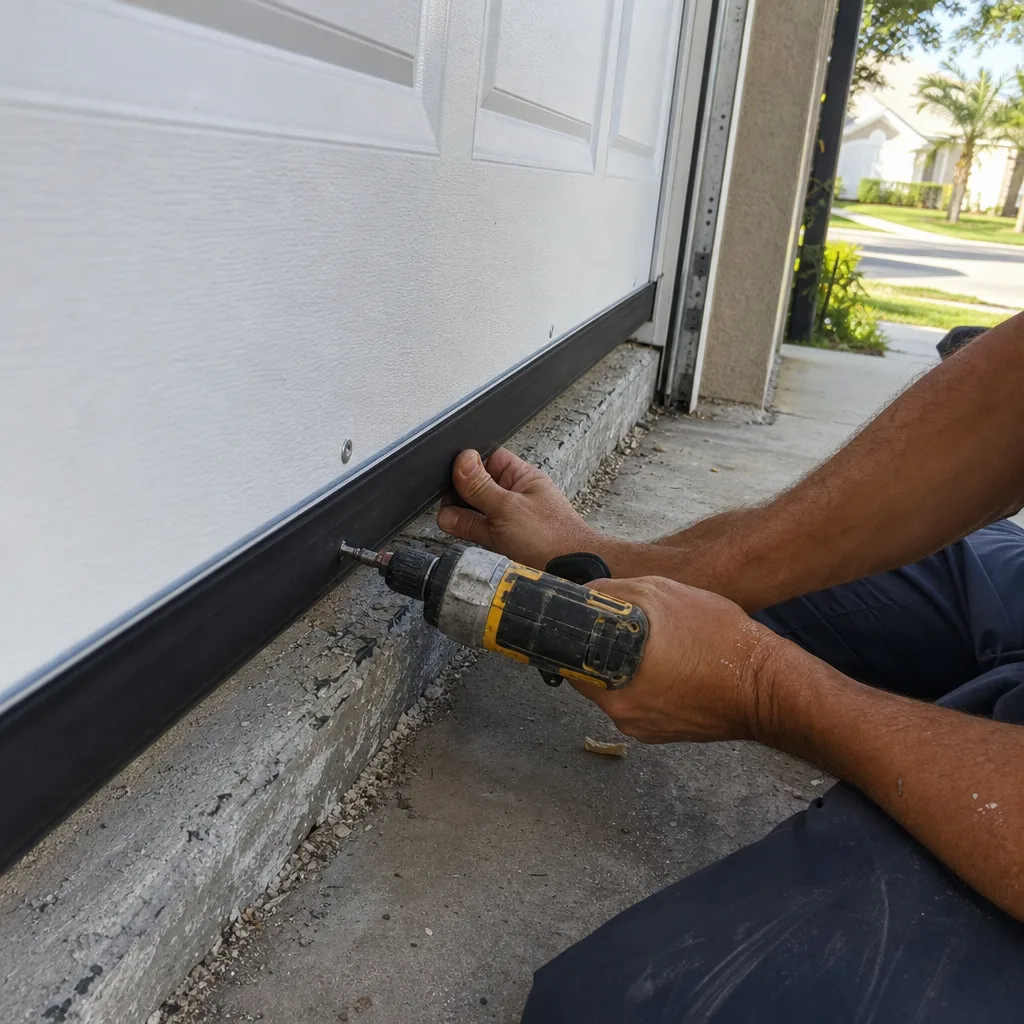
- Treating all repairs as equally risky. Lubrication and spring replacement are not the same category of task, and treating them as such either scares you away from easy DIY wins or gives you false confidence on genuinely dangerous work. Sort by component, not by the word “repair.”
- Using the wrong winding bars on a torsion spring. If you’re tempted to use screwdrivers instead of proper steel winding bars, take that as a sign to stop. Screwdrivers bend and slip under spring tension, and the result is not a story you want to tell. Bradenton hardware stores sell the right bars, but the proper response is to not need them.
- Buying a spring online without knowing the wire diameter and coil count. Torsion springs are sized to the exact weight and balance of a specific door. A generic spring from an online marketplace is a guess, and a wrong guess means the door won’t balance, which strains the opener and shortens the life of every other component. We see this mistake in Bradenton garages more than any single other DIY failure.
- Ignoring the Florida Building Code on wind-rated doors. If your door carries a product approval number and you swap a structural component for a non-matching part, you’ve voided the wind rating. Your insurance company will not be sympathetic after the next storm. This is not a theoretical concern in a coastal city.
- Applying WD-40 to everything and calling it maintenance. WD-40 is a water displacer, not a garage door lubricant. It cleans and penetrates but doesn’t leave a lasting film. Use white lithium grease or a dedicated garage door lubricant on rollers, hinges, and springs.
- Lubricating the external tracks, or trying to straighten them with a hammer. The tracks don’t need lubrication; the rollers do. And a bent track can’t be hammered straight, it needs replacement or professional realignment. A hammer applied to a track under spring load is a shortcut to a much larger repair.
- Assuming the opener is the problem when the door won’t move. A door that stops mid-cycle is usually a spring balance issue, not an opener failure. Homeowners in Bradenton frequently replace openers only to discover the spring was the problem all along. Diagnose before you buy.
When to Call a Professional
Call a professional when the repair touches a torsion spring, a lift cable, or a load-bearing track. For more guides & resources, explore our blog. Call when your door is wind-rated and the repair involves structural components. Call when you hear the spring snap in the middle of the night and want a second set of eyes on the damage before the door moves again. Call when you’ve attempted an owner-serviceable task and the door still doesn’t behave. Call when the opener is mounted to the ceiling and the electrical work makes you hesitate. Servo Garage Doors Bradenton offers free estimates anywhere in Bradenton, with a flat written price and written scope delivered before any work starts, and a documented photo record at the end of every visit. Call (941) 203-1829 to schedule someone who will show you the failed part before quoting a replacement.
Frequently Asked Questions
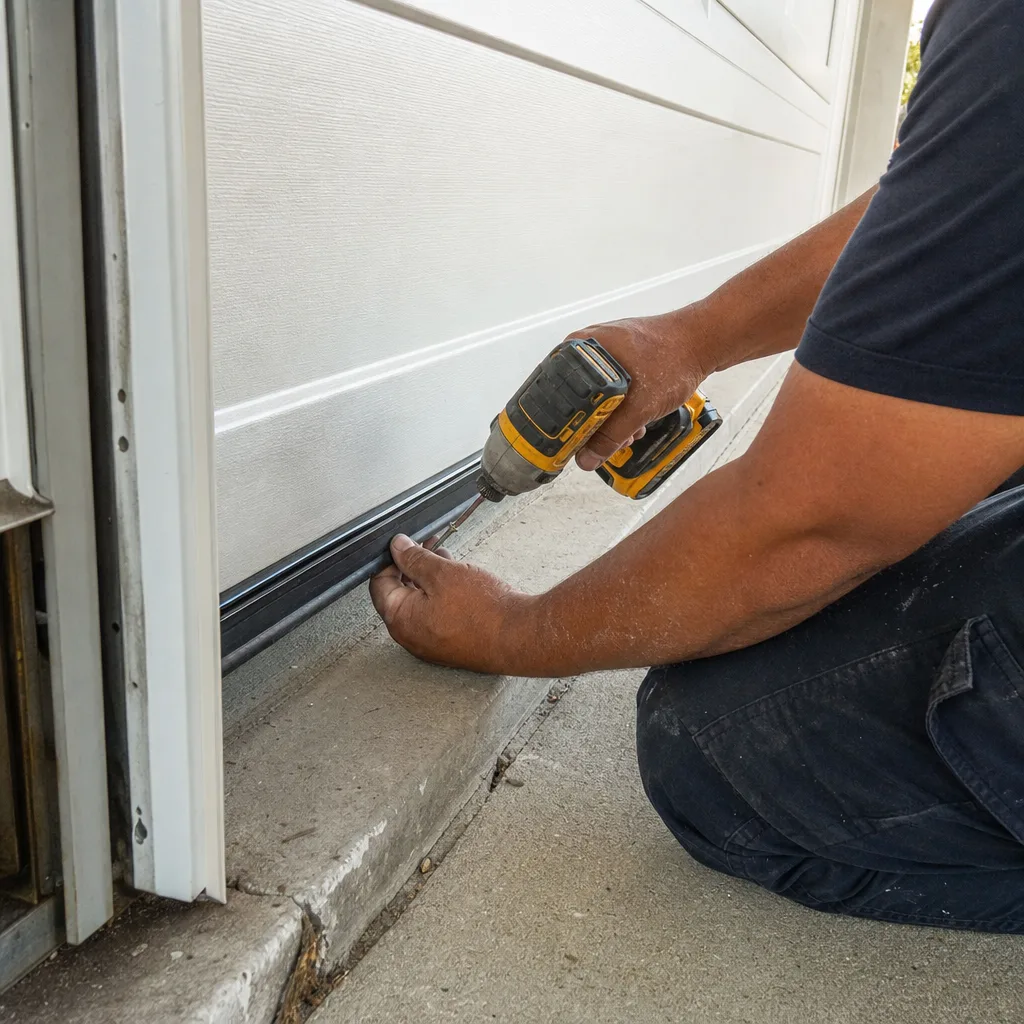
No. A torsion spring stores the door’s full lifting weight in rotational tension, and if a winding bar slips while the spring is under torque, the bar becomes a projectile with enough force to fracture bone or worse. This is not a skill-level issue, it’s a physics issue. Call a Bradenton garage door professional for any spring work.
Weatherseal replacement is the most common owner-serviceable repair in Bradenton, because the coastal humidity cracks rubber seals faster than inland climates. It takes about 30 minutes, costs under $50, and requires only a utility knife and a flathead screwdriver.
Not for every repair, but any structural work on a wind-rated door must maintain the original product approval, which means matching components and performing the work correctly. Lubrication, weatherseal, and sensor alignment are fine for homeowners. Spring, cable, track, and panel work on wind-rated doors should be handled by a licensed contractor.
Repair costs in Bradenton typically range from $120 to $180 for minor mechanical repairs, $250 to $350 for a torsion spring replacement, and $150 to $250 for cable replacement. The exact figure depends on the door’s weight, the spring’s wire diameter, and whether any secondary components need attention. The price should be flat and written before any work begins. Call (941) 203-1829 for an exact quote on your specific door.
Yes, many Bradenton homeowners successfully install their own openers from LiftMaster, Chamberlain, or Raynor, provided they have a stable ladder, a drill, and patience for the travel-limit and force-setting adjustments. The main risk is a misconfigured force setting, which affects how the door responds to obstructions. If the electrical work is hardwired rather than plug-in, that’s the point where a professional becomes the safer call.
Look for a product approval sticker or label on the door panel, usually on the interior side near a hinge. It will list the manufacturer, the wind-load rating, and a Florida product approval number. If you can’t find it, your door may predate the current wind-load provisions. Bradenton homes east of 41 are more likely to have older, non-rated doors than coastal or barrier-island homes built under newer codes.
The Bottom Line
The DIY-versus-professional decision for garage doors is not a cost question. It’s a risk-classification question, and the classification is binary: spring-involved work is professional-only, full stop, because the stored energy in a wound torsion spring makes the downside of a mistake catastrophic. Everything else, from weatherseal to sensor alignment to keypad programming, is genuinely owner-serviceable and rewards a careful homeowner with clean savings. In Bradenton, the additional variables are the Florida Building Code’s wind-rated provisions and the salt-air corrosion that complicates every mechanical repair. Know which bucket your problem is in, and the decision makes itself. And when the bucket is professional-only, call someone who shows you the failed part before quoting a replacement, has a flat written price on the table before work starts, and leaves a documented photo record when the job is done. Call Servo Garage Doors Bradenton at (941) 203-1829.
Written by Marcus Deller, Owner at Servo Garage Doors Bradenton, serving Bradenton since 2015.