
Last updated September 20, 2026
Full 25-point door and opener safety check with every visit - springs, cables, rollers, tracks, and your LiftMaster or Chamberlain opener included
You get a price before we start. It does not change when the truck arrives.
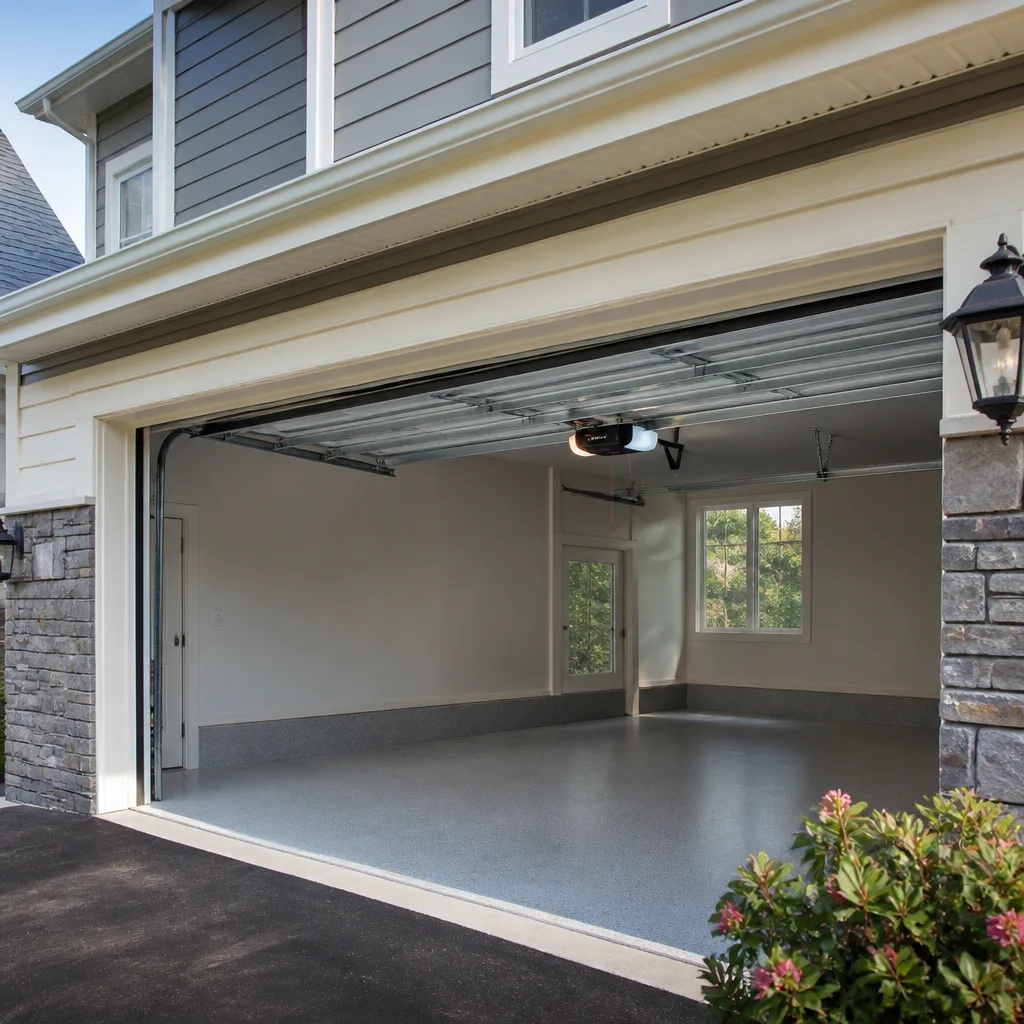
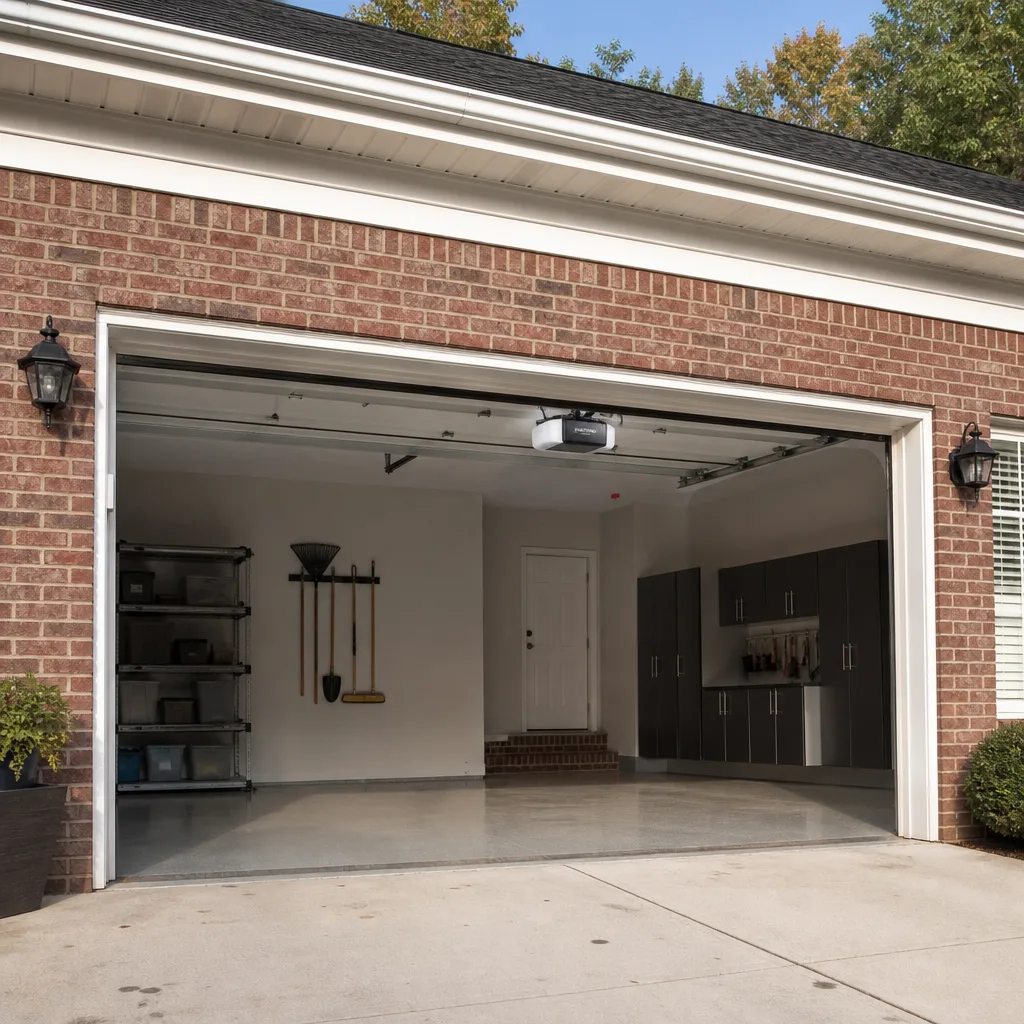
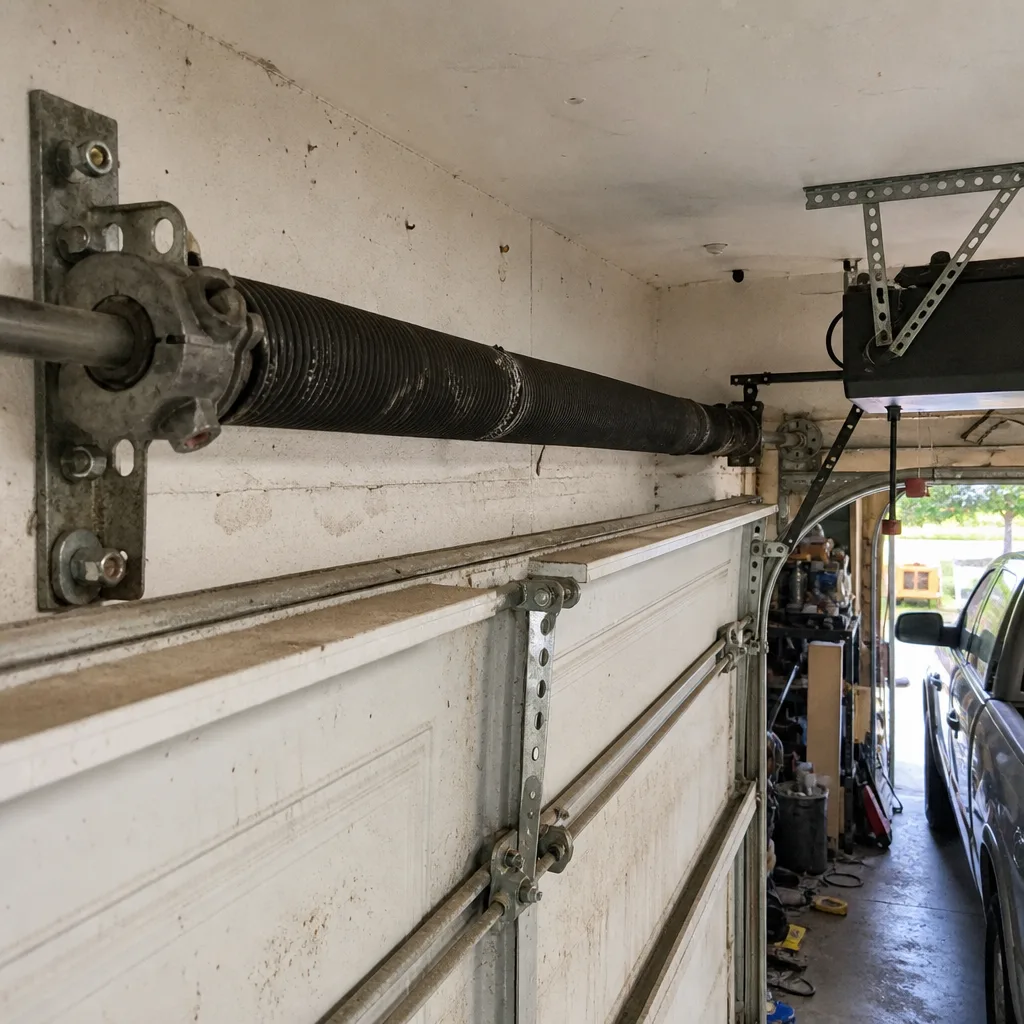 Before
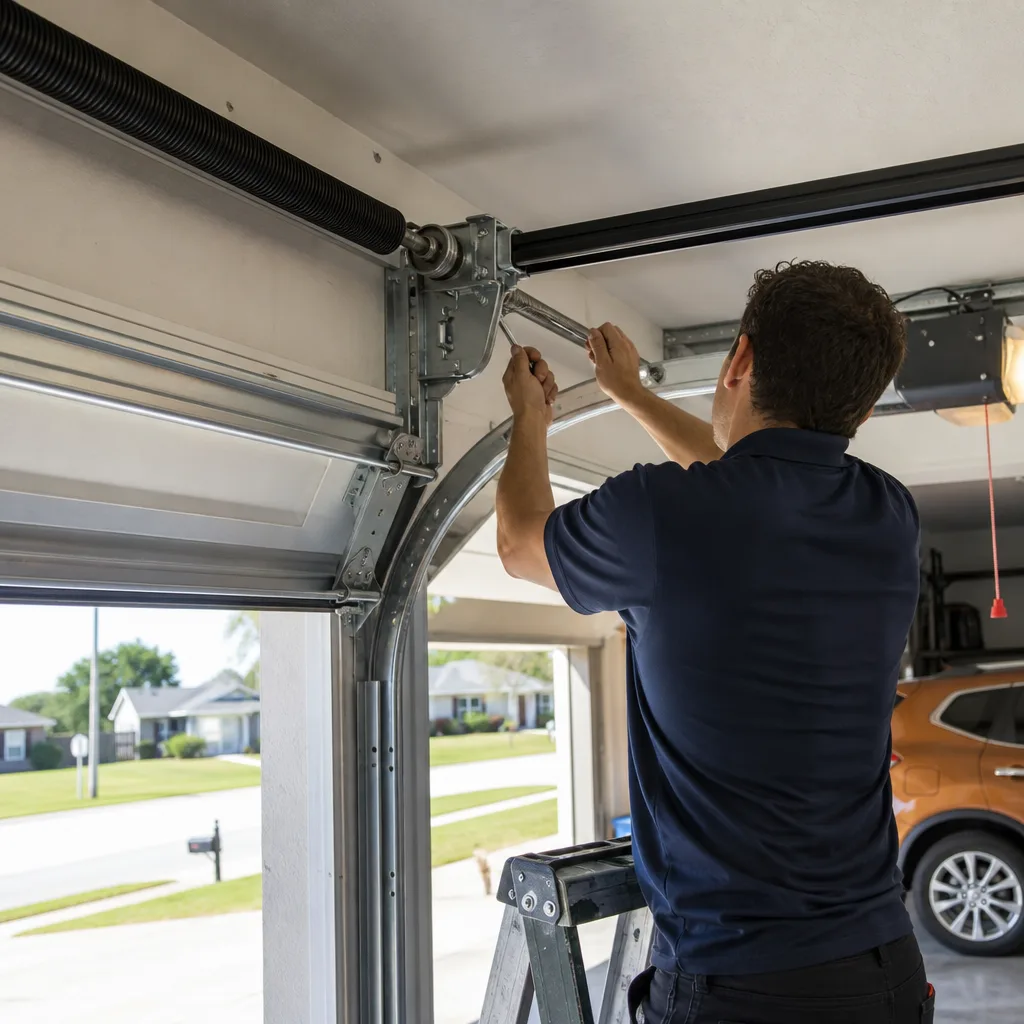 After
After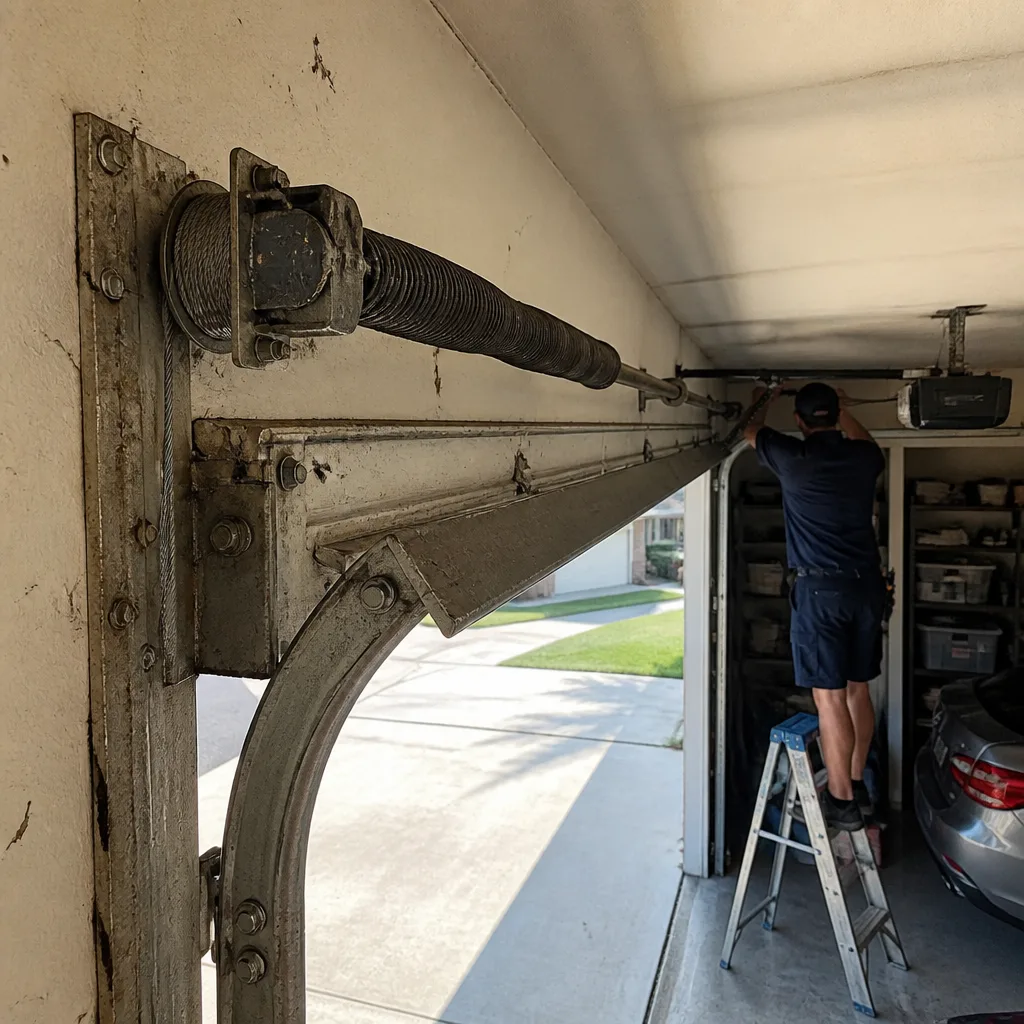 Before
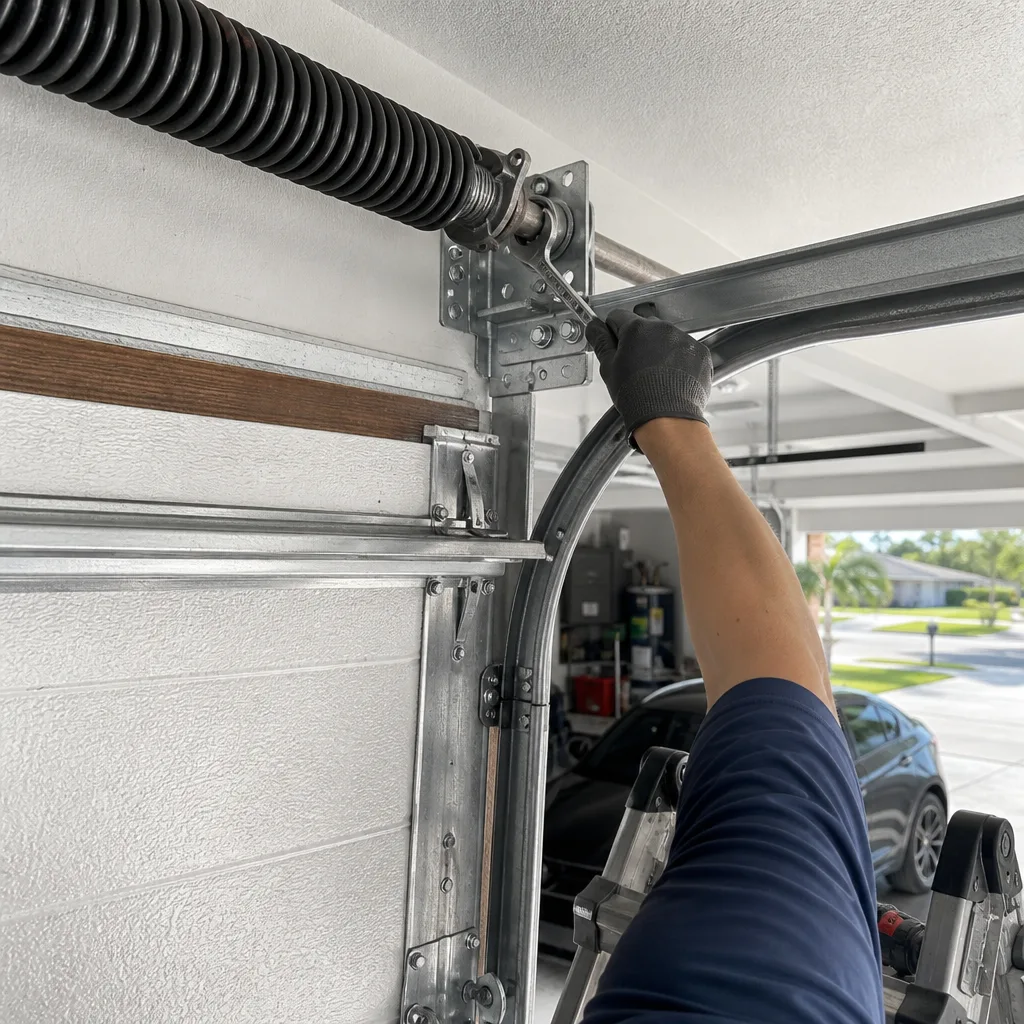 After
After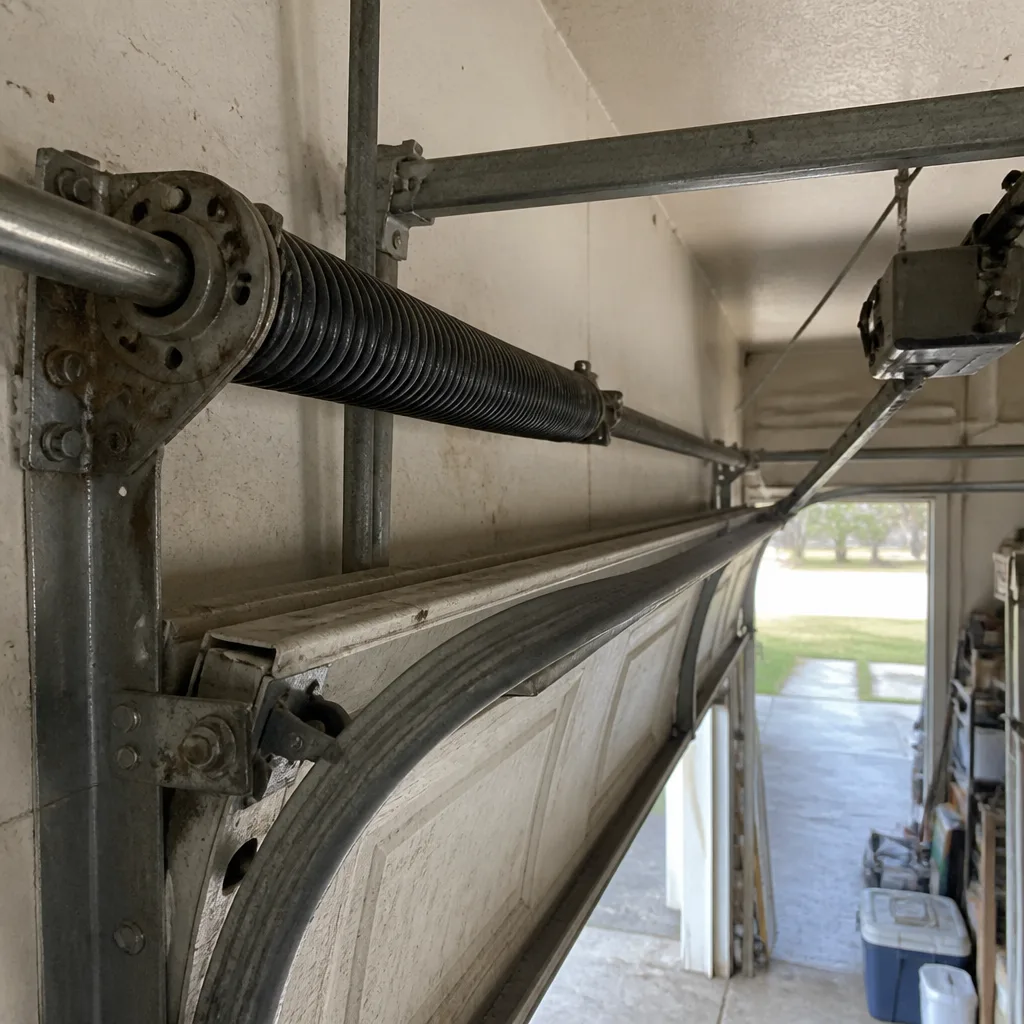 Before
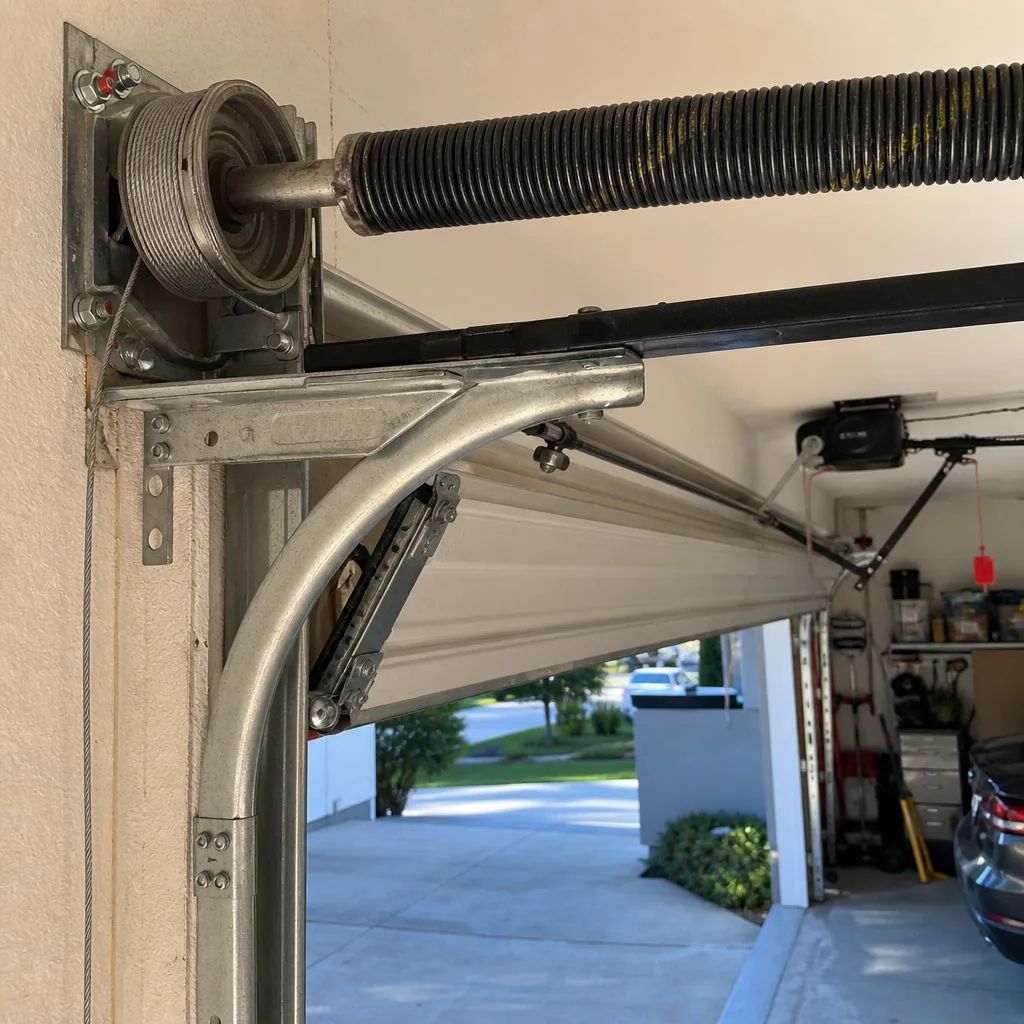 After
AfterGarage Door Permits, Codes & Inspections in FL: What You Need to Know
An unpermitted garage door replacement in Florida doesn’t just risk a code enforcement fine. It can be cited by a claims adjuster as grounds to deny a hurricane damage claim, because the door’s wind-resistance rating cannot be verified without the permit inspection record. That’s the quiet risk most Bradenton homeowners don’t discover until the wrong moment. This guide maps the actual permit path in Manatee County: when you need one, what the inspector checks, what it costs if a previous owner skipped the process, and how to verify your current door’s compliance without pulling paperwork. For more guides & resources on protecting your home, see our blog.
Quick Answer
In Manatee County, most garage door replacements require a permit and at least one inspection because Florida Building Code Chapter 16 imposes wind-load requirements on all exterior door assemblies in the Bradenton wind speed zone. A like-for-like replacement of just the opener motor or a panel insert may qualify for an exemption, but replacing the door, track, or springs triggers the permit path. The permit typically costs between $75 and $150 at the county level, with inspections verifying the door’s product approval number and installation anchoring against the approved wind load.
Table of Contents
- When Manatee County Requires a Permit for Garage Door Work
- The Like-for-Like Exemption: What Qualifies Under the FBC
- Florida Building Code Chapter 16 and Bradenton’s Wind Zone
- What the Inspector Actually Checks: Rough-In vs. Final
- How to Verify Your Current Door Is Compliant Without Pulling Permits
- What to Do If a Previous Owner Installed a Door Without a Permit
- What Garage Door Permits Cost in Bradenton
BeforeAfterWhen Manatee County Requires a Permit for Garage Door Work
Manatee County Building Services requires a permit for any garage door work that changes the door assembly itself. That means the door panel, the track system, the springs that counterbalance the door, or the structural anchoring points. If the work touches any of those, you’re in permit territory. The governing reference is Florida Building Code (FBC) Section 105.1, which requires a permit for any work regulated by the code, and FBC Chapter 16 applies wind-load criteria to garage doors as exterior wall elements.
Here’s the plain-language breakdown of when Manatee County wants a permit:
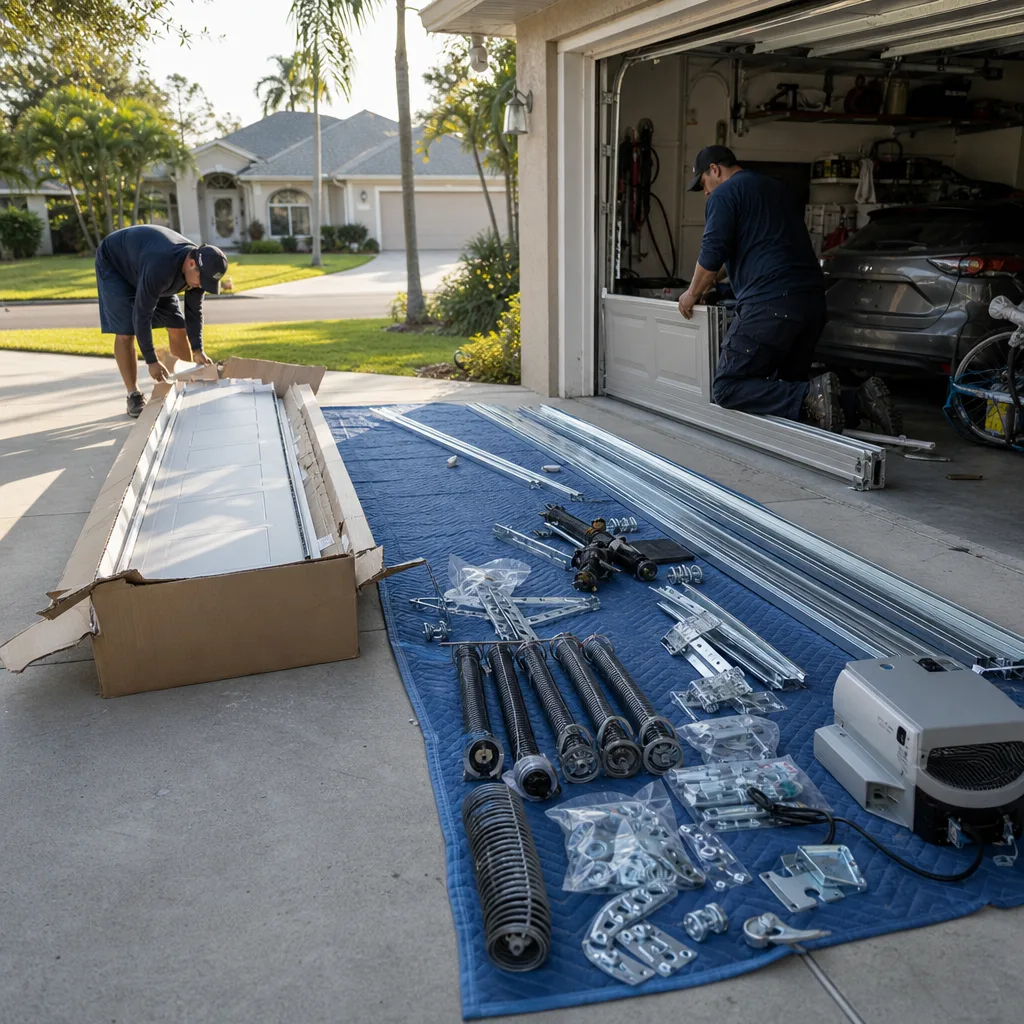
- Full door replacement: New door, new track, new springs. Permit required. The county needs to verify the new door’s product approval number matches the wind-load zone for the property address.
- Door panel replacement only: Same track, same springs, new panels from the same manufacturer. The county treats this as an alteration, not like-for-like maintenance. A permit is usually required because the panel carries the wind-rating label.
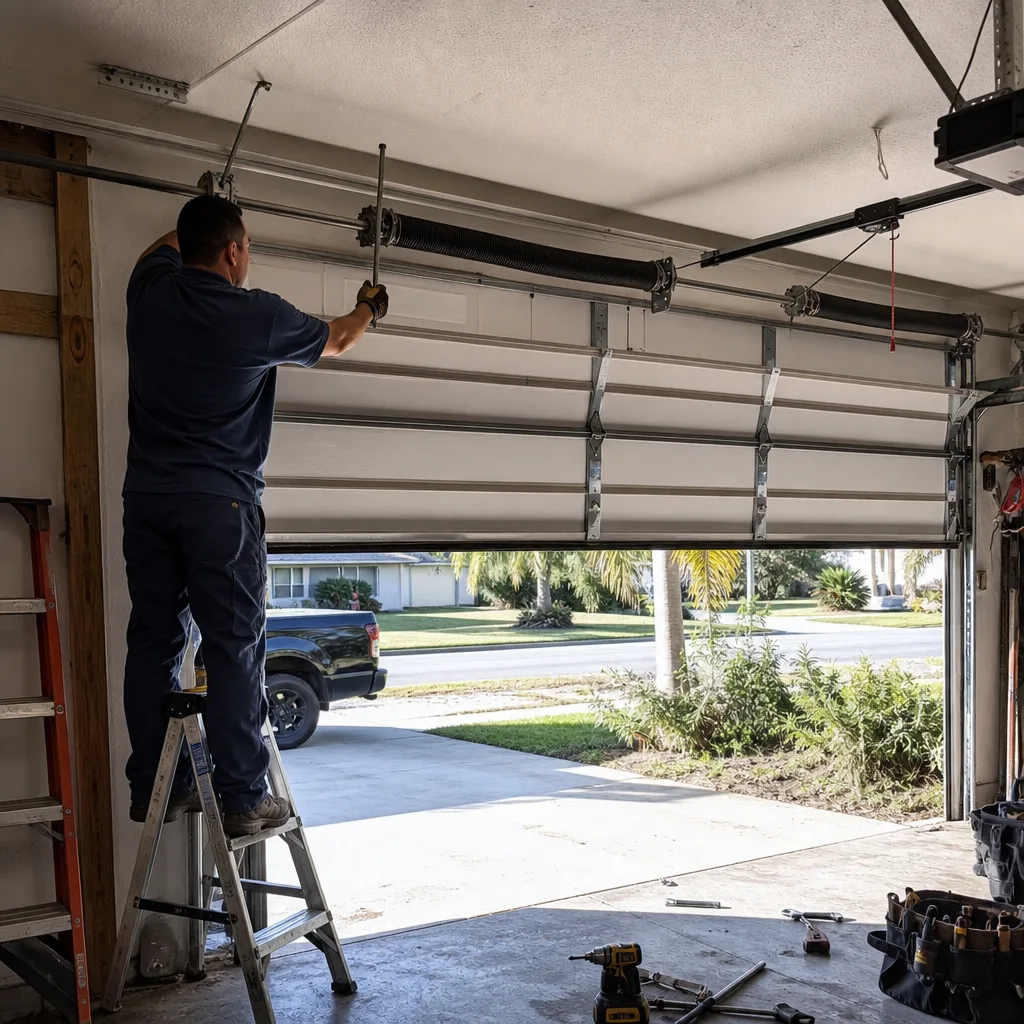
- Track or spring replacement: Permit required. The springs are part of the wind-load path, and the county inspector verifies the installation against the manufacturer’s approved specifications.
- Opener motor swap: Replacing the Chamberlain or Genie opener head while keeping the existing door and track. Generally exempt because the opener is not part of the structural wind-resistance assembly. This falls under minor electrical work when a dedicated outlet already exists.
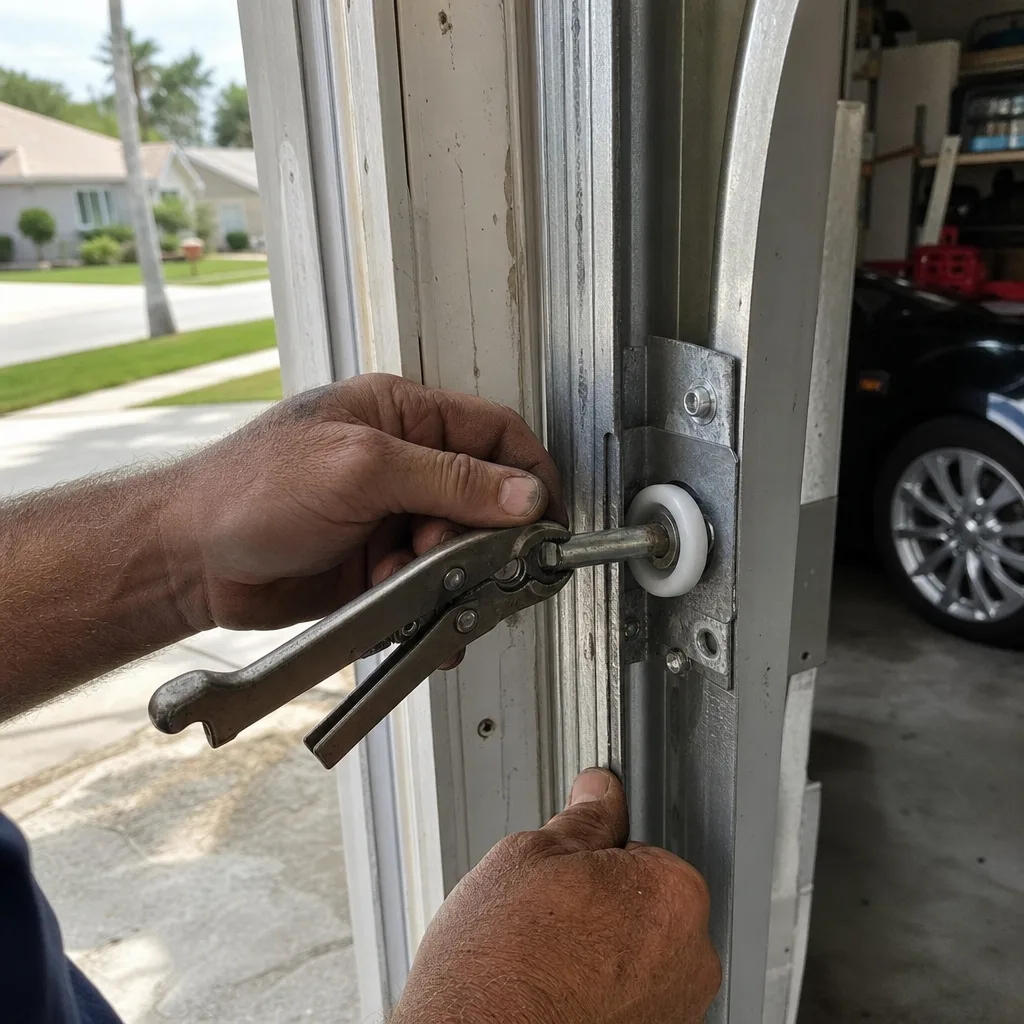
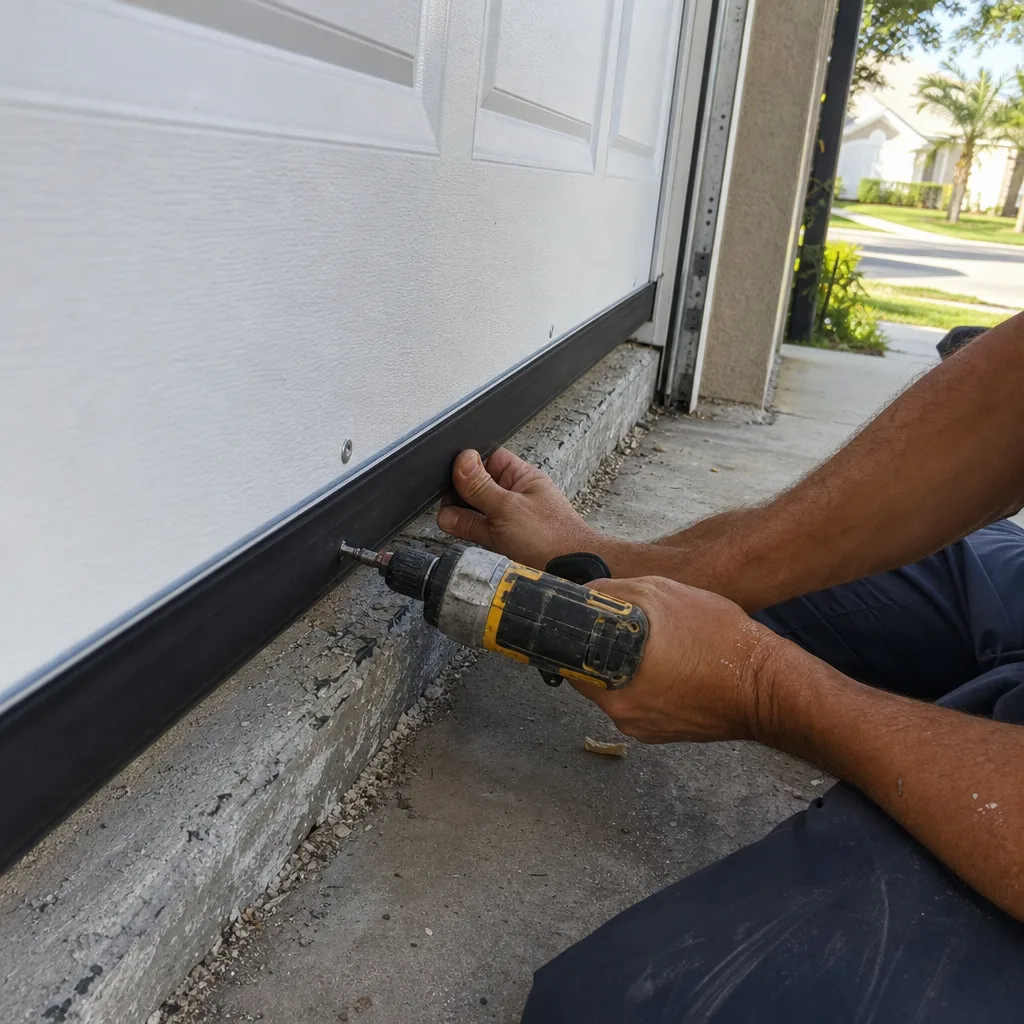
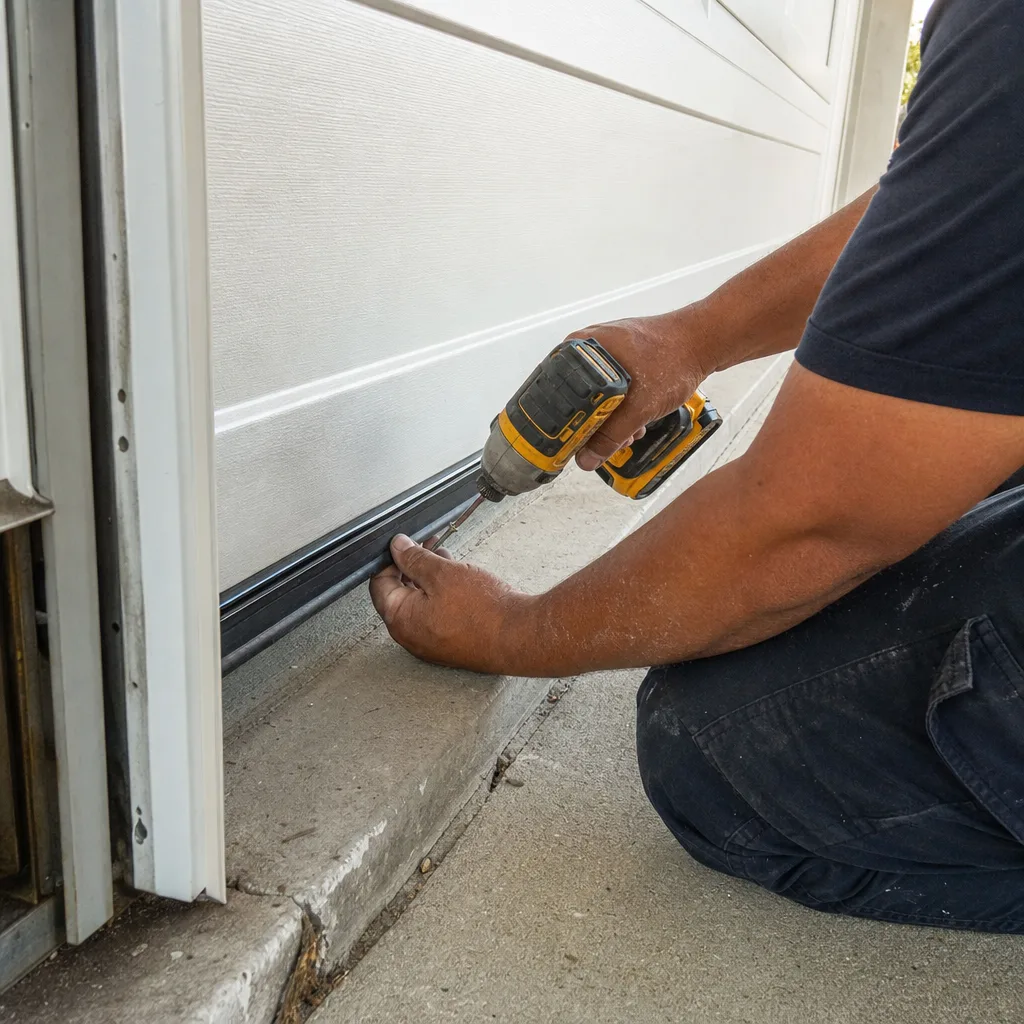
- Garage door repair that restores function: Replacing a broken roller, a hinge, or a weather seal. No permit. These are maintenance items that don’t change the wind-load characteristics of the assembly.
We’ve handled permits for replacements in Bradenton neighborhoods from Palma Sola to River Club, and the county’s position is consistent: if the door itself changes, the permit process wants a record of what went in and who verified it. A garage door repair in Bradenton that keeps the existing door and hardware rarely triggers a permit. A replacement that changes the door almost always does.
The Like-for-Like Exemption: What Qualifies Under the FBC
Florida Building Code Section 105.2 contains the work-exempt-from-permit list. The relevant language for garage doors covers “minor repairs” and “replacement of parts that do not change the door’s wind-resistance rating.” The key phrase is “like for like.” If you remove a door that carries a Miami-Dade NOA (Notice of Acceptance) or Florida Product Approval and replace it with the exact same model, same size, same wind-load rating, and same anchoring method, the work may qualify as maintenance rather than a code-regulated replacement.
But here’s the nuance most homeowners miss: the exemption applies to the product, not the labor. A like-for-like door swap still requires:
- The existing door’s product approval number to be legible and recorded before removal.
- The replacement door to carry the same approval number or a documented equivalent.
- The anchoring to match the original installation, with no modification to the framing or fasteners.
- The property to be outside a flood zone that imposes additional structural requirements under FBC Chapter 16.
In practice, most Bradenton homeowners replacing a door installed in 2010 or earlier won’t qualify for the like-for-like exemption. The product has been discontinued, the approval has lapsed, or the original installation didn’t meet current anchoring standards. When the product on the door is a Clopay or Amarr panel that’s no longer manufactured with the same approval number, the county requires a new permit and a new inspection. We tell customers the same thing: if the manufacturer’s label on the new door doesn’t match the one that came off, expect the permit path.
Florida Building Code Chapter 16 and Bradenton’s Wind Zone
Bradenton sits in FBC wind speed zone 150 miles per hour (mph) ultimate design wind speed, which translates to roughly 115 to 120 mph nominal, depending on the specific parcel and exposure category. FBC Chapter 16, Section 1609 sets the wind-load requirements for exterior wall elements, and garage doors fall under the “door assemblies” provisions. The practical consequence: every garage door installed on a home in Bradenton must carry a Florida Product Approval or Miami-Dade NOA demonstrating that the product was load-tested to withstand the design pressure for the property’s wind zone.
That design pressure is expressed in pounds per square foot (psf). For a typical single-family home in Bradenton with exposure category B or C, the required design pressure for a garage door ranges from +18 to -26 psf depending on door width, roof height, and proximity to open water. Homes west of 75th Street West, closer to Anna Maria Sound, often require a higher design pressure rating than homes east of I-75 due to exposure category differences. The product approval label on the door spells out the tested psf rating, and the county inspector checks that number against the permit’s wind-load calculations.
Here’s the table of minimum door specifications by exposure category in Bradenton:
- Exposure B (suburban, sheltered): Design pressure typically +18/-22 psf. Most standard wind-rated Clopay and Amarr doors meet this threshold.
- Exposure C (open terrain, near water): Design pressure typically +22/-28 psf. The door must be specified with heavier gauge track and reinforced anchoring.
- Exposure D (direct waterfront): Design pressure may exceed +30/-35 psf. Only doors with a Miami-Dade NOA for high-velocity hurricane zones qualify.
The practical takeaway: when you install a garage door in Bradenton, the product selection is driven by the wind zone math, not by aesthetic preference. A door that looks right but carries a lower psf approval than the property requires will fail the inspection and require rework or replacement. We’ve seen this happen on homes in the Whitfield area, where waterfront exposure pushes the requirement above what many standard door lines were tested for.
What the Inspector Actually Checks: Rough-In vs. Final
Manatee County garage door permits follow a two-stage inspection path when the door is part of new construction or a major renovation. For a straightforward replacement of an existing door, the county typically requires a single final inspection after installation. Here’s what each stage involves.
Rough-in inspection (new construction or structural alteration only):
- The inspector verifies the rough opening dimensions against the approved permit drawings.
- The king studs, header, and jamb construction are checked for compliance with FBC Section 2308 for lateral load resistance.
- The anchoring points for the garage door track are verified against the product approval documentation. The approval specifies fastener type, spacing, and embedment depth into the structural framing.
- Any steel reinforcement plates or tie-down straps required by the wind-load calculations must be in place and documented.
Final inspection (all garage door permits):
- The inspector confirms the installed door carries a legible Florida Product Approval label or Miami-Dade NOA sticker.
- The product approval number on the installed door is cross-referenced against the approval number listed on the permit application.
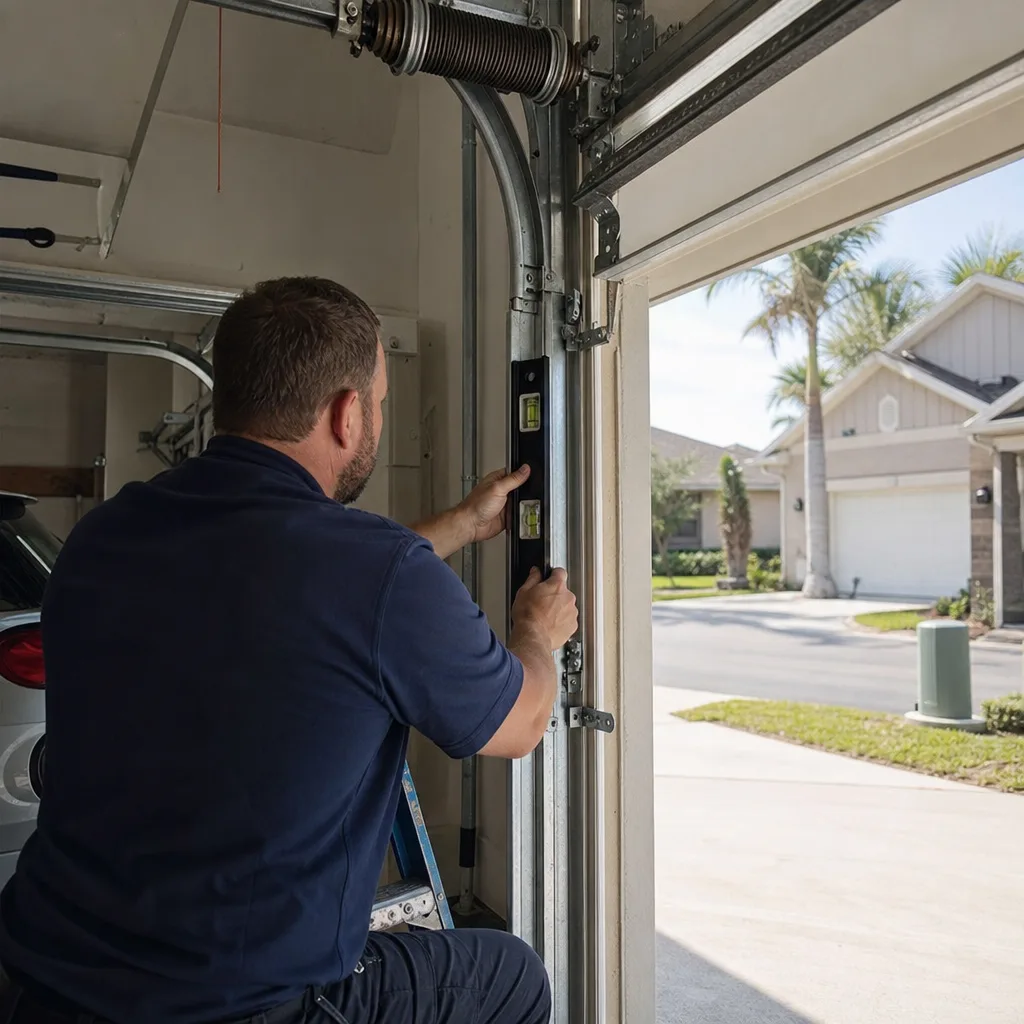
- Track brackets, spring anchor points, and header attachment are visually verified against the manufacturer’s installation instructions.
- The door’s balance test: the inspector releases the door at mid-height and verifies it stays put, which confirms the spring tension correctly counterbalances the door weight. A door that drifts up or down fails because an unbalanced door puts uneven load on the wind-resistance hardware.
- Photographic documentation of the installed door and label are added to the county’s permit record.
The balance check in step 4 is the one most replacement doors fail, in our experience. A torsion spring that’s wound slightly off changes the door’s behavior under storm loading, and county inspectors in Manatee County are specific about it. For the homeowner, the inspection is the durable proof that the door meets FBC Chapter 16. That record is what an insurance adjuster will ask for after a hurricane.
How to Verify Your Current Door Is Compliant Without Pulling Permits
You can determine whether your current door meets Bradenton’s wind-load requirements by reading the labels on the door itself and the hardware. No county visit required. Every code-compliant garage door installed in Florida since 2002 carries identification that connects the product to a specific wind-load test.
Look for these three things, in this order:
- The product approval label on the door panel. This is typically a metal or mylar sticker on the interior side of the bottom or top panel. It displays the manufacturer name, the product approval number (FL prefix followed by a series number), the design pressure rating in psf, and the wind speed rating. If the label is missing, illegible, or painted over, the door’s compliance cannot be verified from the door itself.
- The Miami-Dade NOA sticker, if present. Some manufacturers test to the Miami-Dade high-velocity hurricane zone standard, which exceeds FBC minimums for Bradenton. The NOA sticker shows a number like “NOA 19-1123.4” that you can look up in the Miami-Dade online database. Its presence is stronger evidence of compliance than a Florida Product Approval alone.
- The track and hardware gauge. Wind-rated doors use heavier track profiles than non-rated doors. A Clopay or Amarr wind-loaded door typically uses 2-inch track with 14-gauge steel, while non-rated doors use lighter 16-gauge track. The difference is visible when you look at the track profile from the side: a wind-rated track has a deeper channel and thicker mounting brackets.
If all three are present and the psf rating meets or exceeds the requirement for your property’s exposure category, your door is likely compliant. If any one of the three is missing, you should get a professional evaluation before storm season. A garage door opener repair in Bradenton visit is a natural time to have a technician photograph the existing labels and note what’s present, because that documentation becomes the baseline for any future insurance claim or permit application.
What to Do If a Previous Owner Installed a Door Without a Permit
This is more common in Bradenton than most people assume. A previous owner replaces a garage door, pays cash to a handyman, and no permit is ever pulled. The homeowner finds out years later, usually during a home insurance policy review or when a buyer’s inspection flags the missing permit record. The county’s position is straightforward: the work happened, which means the permit is required retroactively if the door is going to remain.
The retroactive compliance path in Manatee County looks like this:
- Document the existing door. Photograph the door, the product labels if present, the track system, and the anchoring points. This becomes the baseline for the permit application.
- File a “permit after the fact” application. Manatee County Building Services processes these as regular permit applications, with an additional review fee that typically ranges from $75 to $200 depending on the scope of the work and how long ago it was completed.
- Provide engineering documentation if the product label is missing. If the door carries no legible product approval, the county will require a Florida-licensed professional engineer to evaluate the door and issue a letter certifying that the installation meets or exceeds FBC Chapter 16 wind-load requirements for the property’s exposure category. That engineering review typically costs between $400 and $800 in the Bradenton market.
- Correct any deficiencies identified during the inspection. If the anchoring is under-specified or the track is the wrong gauge, the correction requires modifying the existing installation or replacing the door entirely.
- Obtain the final inspection and the permit record. Once the county signs off, the door has a permit record and the homeowner has durable evidence of compliance for their insurer and any future buyer.
The realistic cost range for a retroactive permit on a garage door in Bradenton, assuming the door itself was installed correctly, is $650 to $1,100 all-in, including the permit fee, the engineering letter if needed, and any minor anchoring corrections. If the door was not installed to wind-load standards, the repair or replacement cost pushes the total into the $2,500 to $4,500 range depending on door size and exposure category. We’ve walked homeowners through this exact path on properties in the West Bradenton and Bayshore Gardens areas, and the engineering review is the step that tends to surprise people on cost and timeline. That’s also the step that gives the homeowner a document they can put in front of an insurance adjuster, which is the entire point.
What Garage Door Permits Cost in Bradenton
The Manatee County permit fee for a garage door replacement is based on the valuation of the work, which the county calculates from the door’s installed price. For a standard single-car door replacement with an installed cost between $1,200 and $2,500, the permit fee typically lands between $85 and $135. For a double-car door or a premium wind-rated model from Clopay or Amarr with an installed cost between $2,500 and $5,000, the permit fee runs from $135 to $220.
Here’s the line-item breakdown a Bradenton homeowner should expect on a standard permit for a single-car door replacement:
- Building permit fee: $75 to $125, calculated from the work valuation
- Plumbing/gas/mechanical review surcharge: $5 to $15 (applies when the permit is processed alongside other trade work)
- Records and archive fee: $5 to $10, added to every permit in Manatee County
- Inspection fee: Typically included in the base permit fee for the first inspection; re-inspections run $75 per visit
- Total typical range: $85 to $220 for a residential garage door replacement permit
The homeowner pays the permit fee directly to the county at the time of application, or the contractor includes it as a separate line item on the written proposal. At Servo, the permit fee always appears as a named cost on the written scope. That’s Clause 1 of The Haven Standard at work: a flat, written price and a written scope before any work begins, with no “call for a quote” and no surprises discovered after the fact. What a homeowner pays for the permit is what the county charges, not a markup. If a contractor quotes a permit fee notably above these ranges, ask for the county receipt after the permit is pulled.
Common Mistakes to Avoid
- Assuming an opener swap needs a permit. Replacing the Chamberlain or Genie motor head while keeping the existing door and track falls under the minor-repair exemption in most cases. Pulling a permit for that work adds cost and delay for no inspection value. Confirm with the county before assuming the permit applies.
- Assuming a door replacement doesn’t need a permit. The opposite error. Any change to the door assembly, track, or springs triggers the permit path in Manatee County, and skipping it creates the retroactive problem described above. The permit record is what your insurer will ask for after the next storm.
- Painting over the product approval label. A door’s Florida Product Approval number is the connection between the physical product and the wind-load test. Paint over it, and the door becomes unverifiable, which can force an engineering review at your expense. Mask off the label before painting any garage door.
- Letting a contractor pull the permit in their name without giving you the record. A permit issued to a contractor who later disappears leaves the homeowner without access to the inspection history. The permit record should be in the homeowner’s name or clearly transferred. Ask for a copy of the final inspection report when the job closes.
- Choosing a door based on curb appeal first and wind rating second. A Bradenton door that looks right but carries a psf rating below the property’s requirement will fail the county inspection and require replacement. Wind rating is the primary specification; style is secondary.
- Waiting until after a denied claim to verify compliance. Once the adjuster flags the missing permit, the homeowner is negotiating from the weakest possible position. Verify the door’s documentation before the storm, not after the claim.
When to Call a Professional
The permit path is navigable for a homeowner who has the product documentation and the time to sit for county inspections, but most of the homes we see in Bradenton fall into one of three situations where professional help pays for itself. First, if the existing door carries no legible product approval label, an engineering review is required, and a garage door professional who’s worked with county inspectors can tell you whether the door is recoverable before you spend $400 on a letter. Second, if the property sits in a waterfront or open-terrain exposure zone, the wind-load math gets specific, and a door that meets code three blocks inland may not meet code on the water. Third, if you need the door and the permit handled without you coordinating between a contractor and the county, a full-service garage door company handles the permit, the installation, the inspection, and the documentation in one pass. Servo Garage Doors Bradenton offers free estimates in Bradenton, and every proposal includes the permit fee as a named line item. Call (941) 203-1829.
Frequently Asked Questions
Yes, a permit is required for most garage door replacements in Manatee County because the door is an exterior wall element subject to FBC Chapter 16 wind-load requirements. A like-for-like replacement of the exact same model with matching product approval numbers may qualify for an exemption, but a door from a different manufacturer or with a different wind rating requires the full permit path. Call (941) 203-1829 for help determining whether your specific replacement qualifies for the exemption.
A garage door permit in Bradenton typically costs between $85 and $220, depending on the installed value of the door and whether re-inspections are required. The permit fee is paid to Manatee County and should appear as a named line item on any contractor’s written proposal. If a quote doesn’t show the permit fee separately, ask for it before signing anything.
If a previous owner installed a garage door without a permit, the current homeowner may need to pursue a retroactive permit through Manatee County Building Services. That process includes an engineering review if the product label is missing, which typically costs $400 to $800, plus the county’s permit-after-the-fact fee. The total retroactive path usually lands between $650 and $1,100 if the door was installed acceptably, and higher if corrections are needed.
You can list and sell a house with an unpermitted garage door in Bradenton, but the missing permit becomes a disclosure item and a negotiation point that typically costs more than the permit itself. Buyers’ inspectors flag the door, mortgage underwriters sometimes condition the loan on permit resolution, and insurance carriers may refuse to bind coverage on the home until the compliance path is documented. Resolving the permit before listing usually yields a cleaner transaction.
A hurricane-rated garage door carries a Florida Product Approval label or Miami-Dade NOA sticker on the interior side of the door panel, with the design pressure rating printed on the label. The psf number on the label must meet or exceed the requirement for your property’s exposure category in Bradenton. If the label is missing or painted over, the door’s rating cannot be verified without an engineering evaluation.
Yes, Servo Garage Doors Bradenton handles the permit application, coordinates the county inspection, and delivers the final inspection record as part of the written scope. The permit fee appears as a named line item on the proposal, and the entire job is quoted as a flat, written price before any work starts. Call (941) 203-1829 for a free estimate and a written scope.
The Bottom Line
A garage door permit in Manatee County isn’t a paperwork formality. It’s the document that connects your door to the wind-load test the Florida Building Code requires, and that connection is what an insurance adjuster will ask to see after the next hurricane. The permit process is predictable: identify whether your replacement qualifies for an exemption, file the permit, install a door with the correct product approval for your exposure category, and keep the final inspection record. The path costs $85 to $220 at the county level, plus the door itself, and the record it produces is the difference between a covered claim and a denied one. For Bradenton homeowners, the right question isn’t whether the permit is worth it. It’s whether a door without documentation is worth the risk. Check your existing door’s label before storm season, and follow our Garage Door Repair Maintenance Checklist for Bradenton Homeowners for seasonal upkeep. Call (941) 203-1829 if you need a professional to do it with you.
Written by Marcus Deller, Owner at Servo Garage Doors Bradenton, serving Bradenton since 2015.